
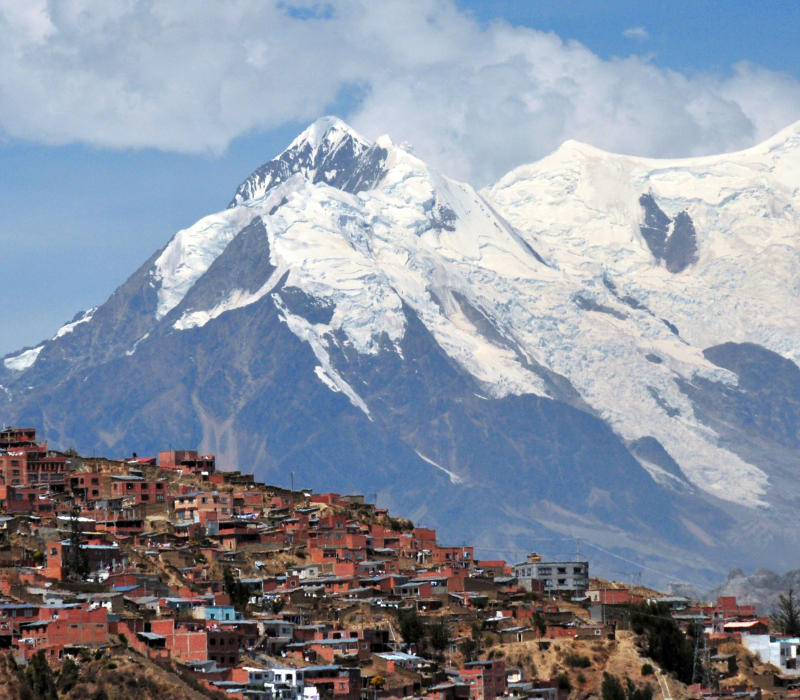
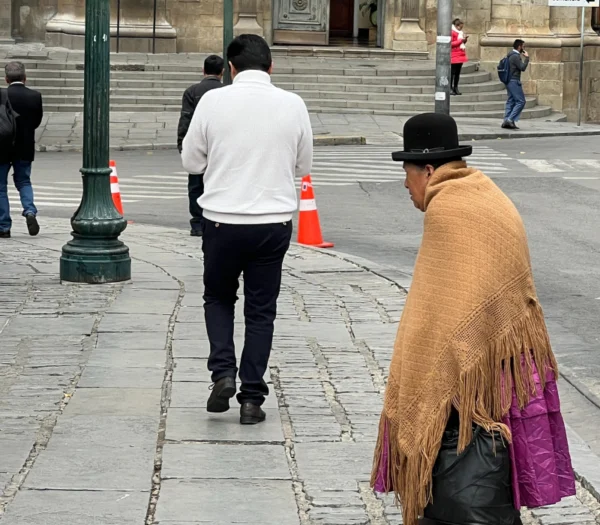
There has always been something undeniably magnetic about La Paz. Perched high in the Bolivian Andes at 3,650 meters above sea level, it is a city that operates by its own logic, where the air is thin, the light is extraordinary, and the streets pulse with an energy that is entirely its own. The strangeness hits you immediately: a cholita in full traditional dress stepping past a sleek contemporary café, the ancient and the modern not merely coexisting but actively, defiantly thriving together.
That contrast has always defined La Paz, a city we’ve been exploring and falling for over thirty years. But something has shifted. As Marisol discovered on a recent visit, the city’s duality has sharpened into something more intentional. It is still raw in all the ways that matter, but La Paz has grown into itself with real confidence.
Once the preserve of the most intrepid travelers, those willing to brave the altitude and the unfamiliar, La Paz has emerged as one of Latin America’s most compelling destinations. Condé Nast Traveller named it as one of the best places to visit in 2025, drawn in large part by a food scene that has gone from overlooked to essential almost overnight. Avant-garde chefs are reimagining Bolivia’s extraordinary larder. Market traditions are being honored and elevated in equal measure. A new culinary confidence is reshaping what Bolivian gastronomy can be, and the world is paying attention.
Extraordinary People, Extraordinary Access
What makes La Paz truly exceptional isn’t simply the experiences. It’s the people behind them. This is not a checklist of things to do. It is an introduction to the brilliant, passionate Bolivians who are shaping their city from within: gallerists, chefs, designers, collectors, and friends who open doors that no algorithm could ever find.
Among them: the Ugalde family, who share their extraordinary private collection with those who know to ask. Marsia Taha, crowned Latin America’s Best Female Chef 2024. Designer Deanna Canedo, whose work carries the legacy of her aunt, the iconic Beatriz Canedo Patiño, the pioneer who brought Bolivian haute couture to 1950s New York. Art collector Ximena Alvarez, whose home is as much living gallery as private residence. And Andrea and Dante, our guides in the city, well-traveled locals who navigate La Paz with the ease and generosity of old friends.
This has always been our greatest asset: people. Brilliant, deeply rooted Bolivians who transform a destination into something personal, unfiltered, and true.
This is La Paz, seen through the eyes of those who live and thrive here. From a private salteña tasting to a behind-the-scenes dinner at Ancestral, welcome to 48 hours in a city reimagined.
48 Hours in La Paz: The Ultimate Insider’s Itinerary
With the scene perfectly set, here’s how to spend 48 unforgettable hours in La Paz—a journey of exclusive encounters, exquisite flavors, and the city’s most captivating corners, revealed by those who know it best.
Day One: Altitude, Art, and Authentic Flavors
9:00 AM | Cable Car City Tour & El Alto’s Cholets
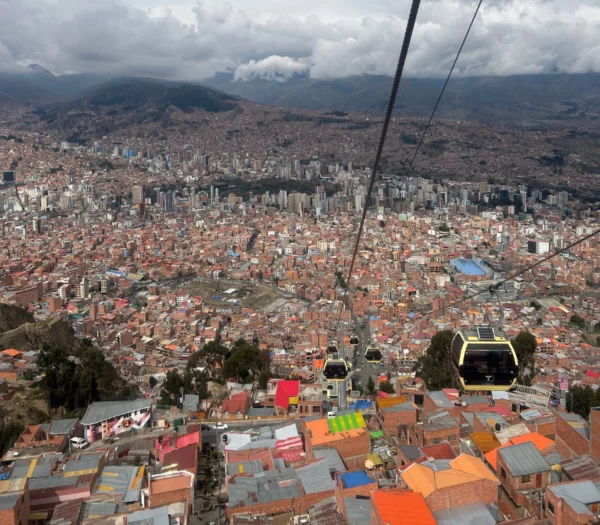
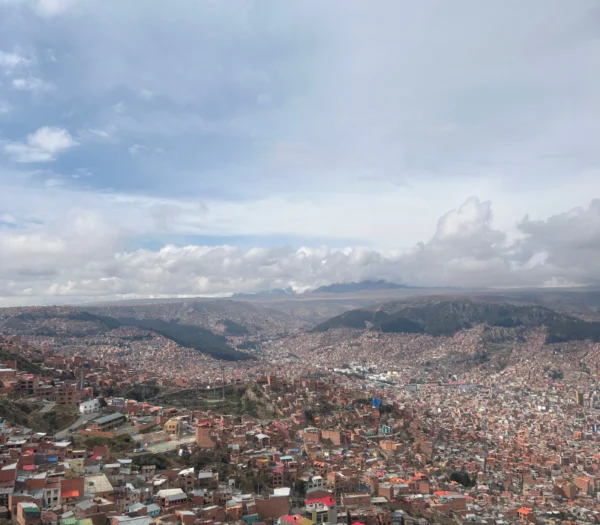
Begin with altitude, more of it. Board the Mi Teleférico, La Paz’s remarkable urban cable car network, and rise above the city’s labyrinthine streets for an aerial introduction to its layered geography. From above, the scale of La Paz becomes legible: the colonial heart of the centre, the vast expanse of El Alto stretching toward the altiplano, the whole improbable city tumbling across its deep Andean bowl.
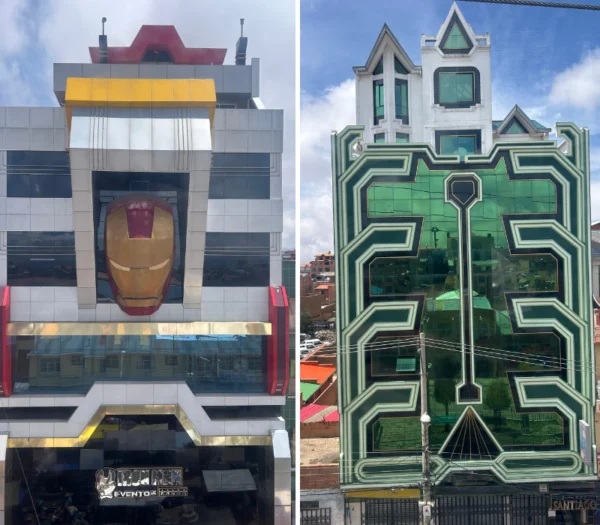
Disembark in El Alto to explore the Cholets, the flamboyant neo-Andean mansions designed by self-taught architect Freddy Mamani. Bold, polychrome, and utterly unlike anything else, they are at once social statement and artistic expression: a vivid monument to Bolivia’s indigenous resurgence and the confidence of a new generation.
11:00 AM | Historic Center Stroll, Concept Stores and Designer Workshops
Back at street level, the city reveals itself on foot. Wander Sagarnaga Street, where artisanal traders have kept their craft alive for generations, then stop into Mistura, a concept store that gathers the best of contemporary Bolivian design under one roof. Nearby, step into the workshop of Ana Palza, whose beautiful pieces dress the upscale cholitas who have become one of La Paz’s most recognizable presences.
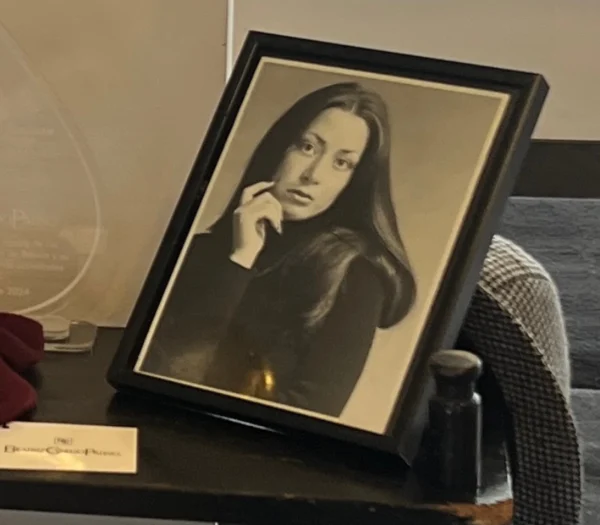
A short drive brings you to Casa Grande Hotel and the atelier of Deanna Canedo, a visit that is part fashion encounter, part family history. Deanna carries forward the vision of her aunt, Beatriz Canedo Patiño, the woman who first put Bolivian textiles, alpaca, llama, vicuña, on the international stage, crafting collections of understated, enduring elegance. To spend time in Deanna’s workshop is to understand that this is not nostalgia. It is a living, evolving tradition. Selected Beatriz Canedo Patiño pieces are available through the Aracari Shop for those who wish to take something of that legacy home.

1:00 PM | Lunch at Popular
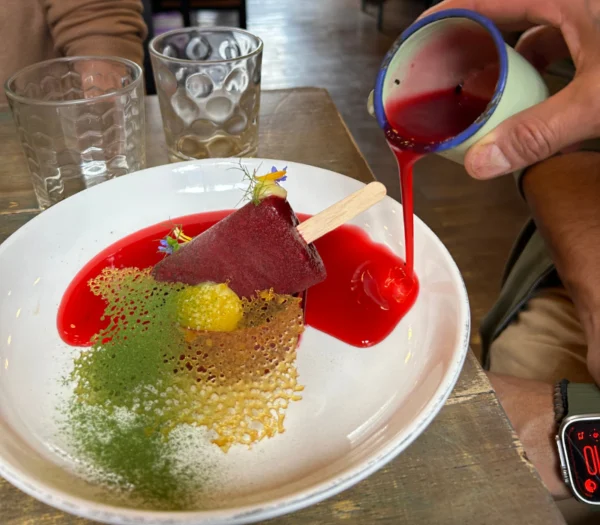
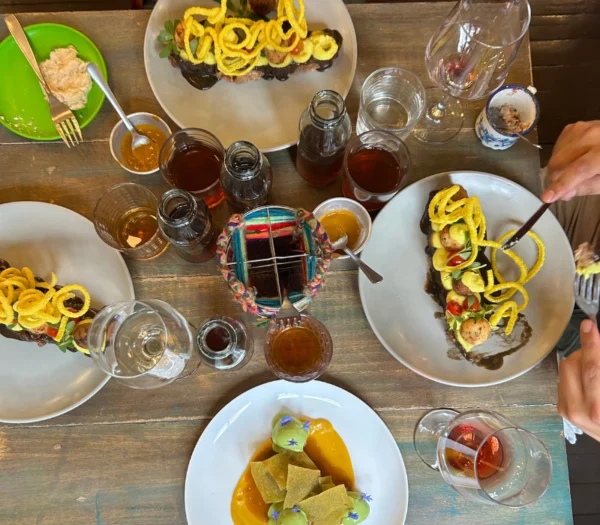
La Paz’s culinary evolution has a genealogy, and it runs through Gustu, the restaurant that first put Bolivian cuisine on the international map, training a generation of young chefs to look at their own country’s extraordinary larder with new eyes. Popular is what happened next: a restaurant born from that spirit, informal and unpretentious in atmosphere, but utterly serious about the plate.
For Marisol, it was the undisputed highlight of the trip. “One of the best meals I’ve had in a long time,” she says. “Every dish felt like a celebration, rooted in tradition but presented with such contemporary finesse.”
There are no reservations, no theatre, just cooking that speaks for itself. Pair it with a Bolivian wine, still under the radar but gathering the recognition it deserves. Grown at some of the highest-altitude vineyards in the world, in the Sucre and Tarija regions, these are wines of genuine character, and Don Cristian is the producer to know. The New York Times has taken note. We have long been convinced.
4:00 PM | Killi Killi Lookout & Singani Tasting
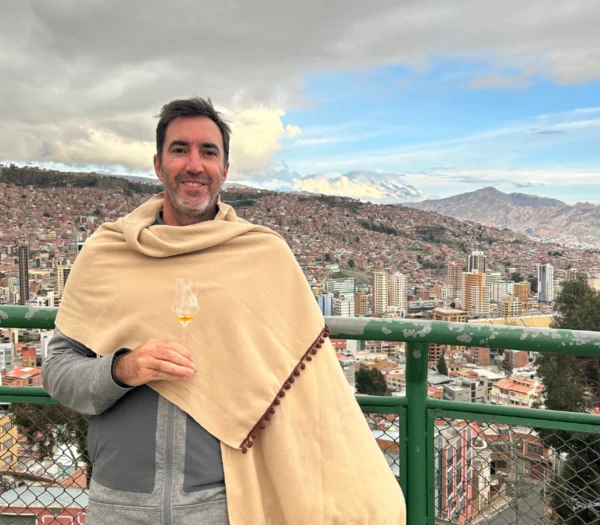
Few views prepare you for Killi Killi. The city spreads across its bowl below, terracotta rooftops, winding streets, the whole extraordinary tangle of La Paz, while Illimani, snow-capped and enormous, holds its position on the horizon like a silent custodian. It is the kind of view that makes you understand, viscerally, why people choose to build a life here.
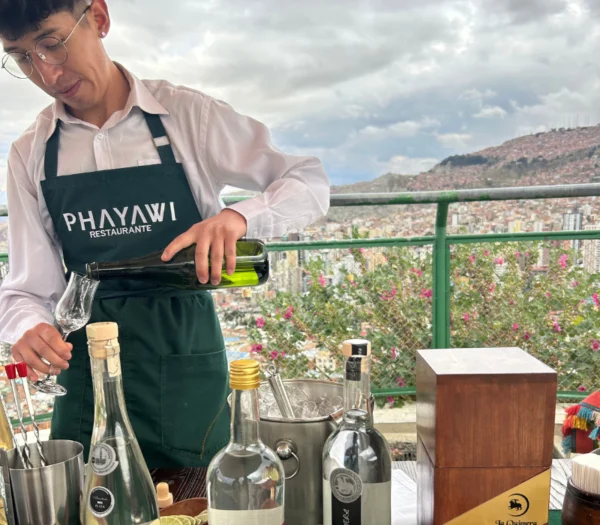
The lookout is also where you will be introduced to Singani, Bolivia’s national spirit, distilled from aromatic Muscat grapes grown at altitude. A private tasting here, as the afternoon light shifts across the mountains, is one of those experiences that stays with you. Each glass a toast to the city laid out below.
5:00 PM | Check-In & Leisure Time at Atix Hotel
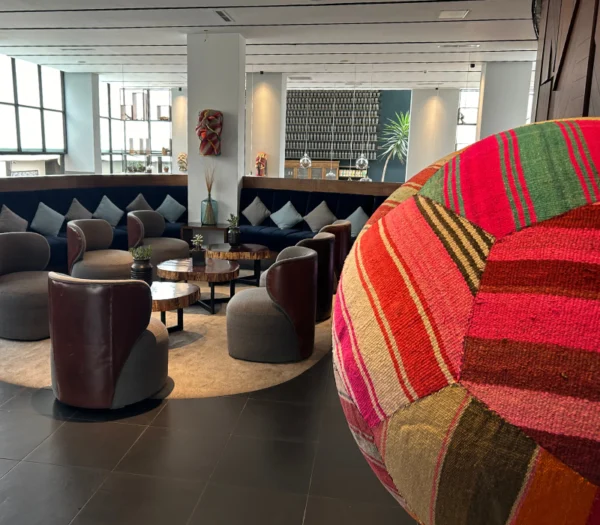
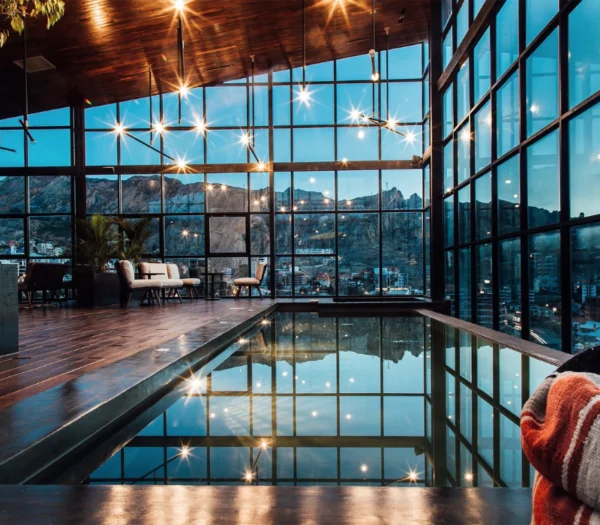
Your base for both nights is Atix Hotel in the Calacoto district, a calm, art-filled retreat where contemporary design meets Andean craft. The name means “to rise” in Quechua, which feels apt. Each floor is given over to the work of Bolivian artists, and the rooftop pool offers yet another angle on a city that seems to reveal a new face from every elevation.
Take the early evening to acclimatize, decompress, and absorb the day before it gives way to night.
7:00 PM | Casual Dinner at Santo Ramen
For the first evening, something deliberately unhurried. Santo Ramen, a short walk from Atix, earns its reputation through consistency and craft rather than fanfare. Japanese comfort food, locally inflected, rich broths, precise toppings, the kind of bowl that asks nothing of you except that you slow down. La Paz, it turns out, contains multitudes.
Day Two: Culture, Coffee, and Culinary Innovation
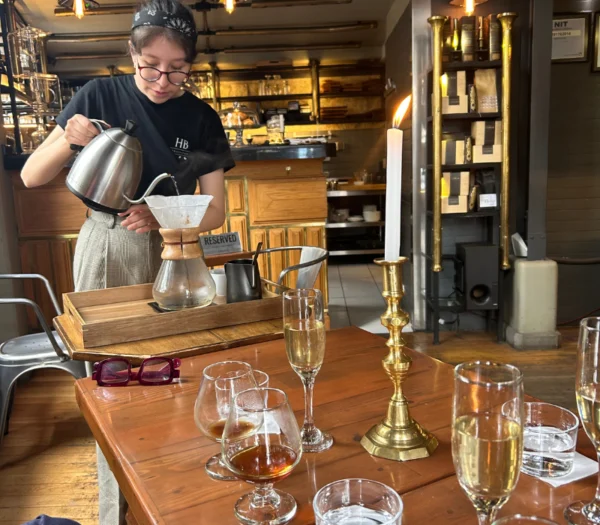
8:00 AM | Specialty Coffee Tasting at Plaza Murillo
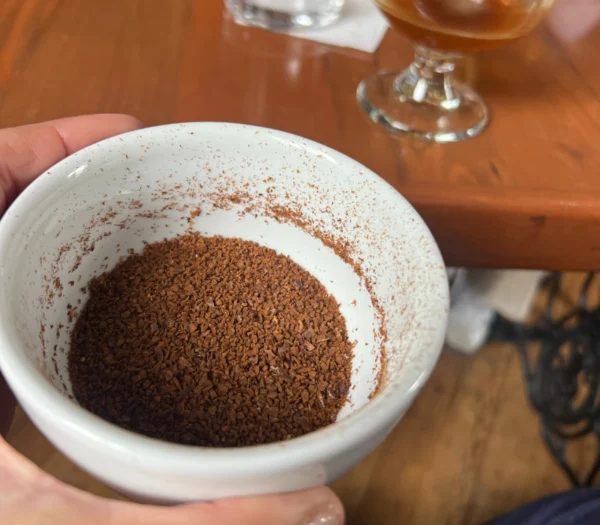
Begin at the city’s political and historical heart, Plaza Murillo, where the cathedral and the Palace of Government face each other across a square that has witnessed more than its share of Bolivian history. This morning, however, the focus is a private tasting with a local coffee roaster, exploring Bolivia’s emerging specialty coffee scene. High altitude and artisanal methods produce brews of unusual complexity and aromatic depth. It is, in the best sense, a gentle way into the day.
9:30 AM | National Museum of Ethnography and Folklore (MUSEF)
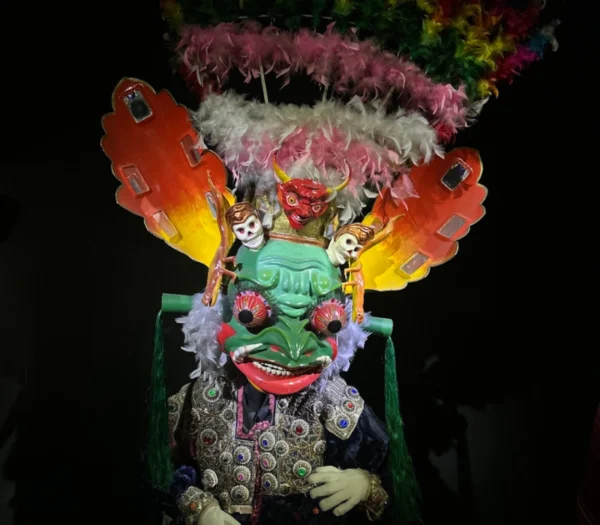
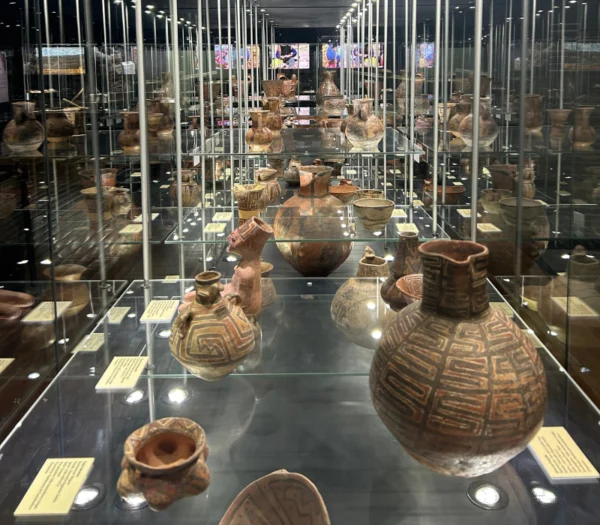
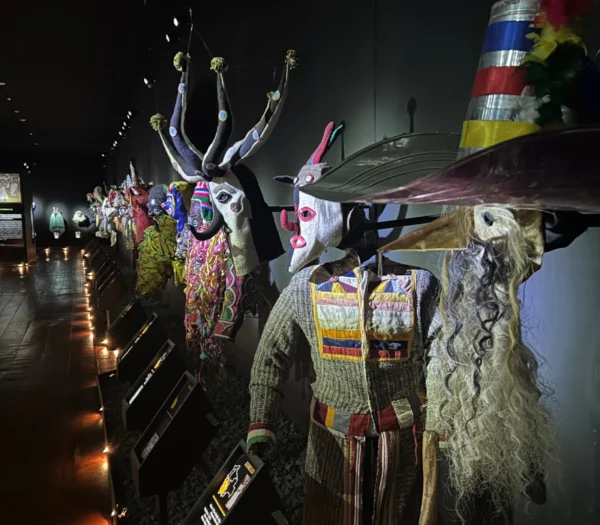
A short walk brings you to MUSEF, one of the finest museums in South America and still one of the least heralded. Ancient textiles, ceremonial dress, indigenous traditions rendered with scholarly care and genuine beauty: it is an essential primer on the cultural currents running beneath everything you have been seeing in the streets outside.
11:30 AM | Salteña Tasting with Andrea
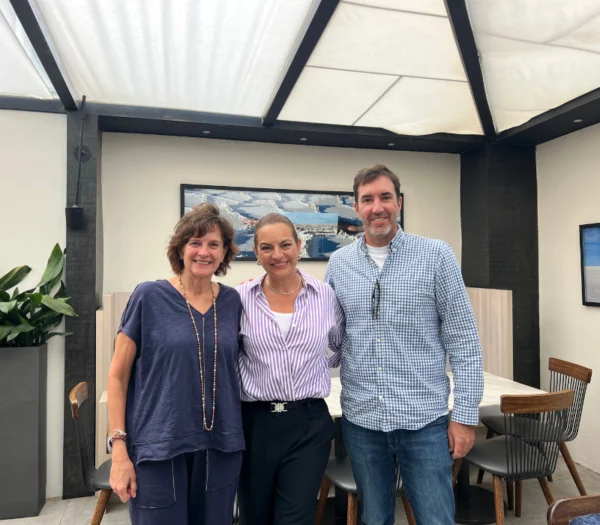
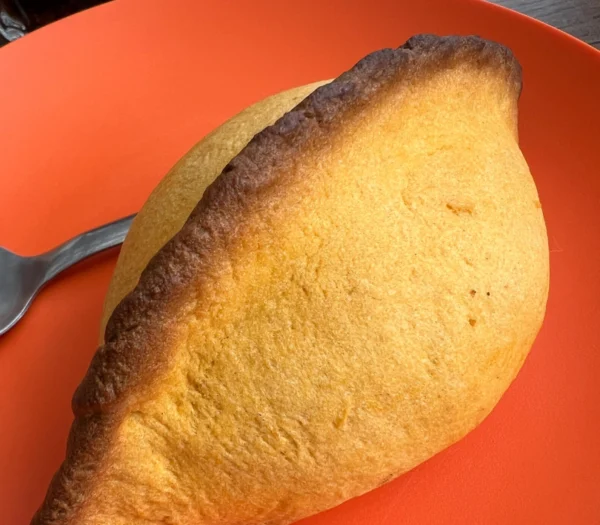
No visit to La Paz is complete without a salteña, the city’s beloved pastry, its golden crust giving way to a rich, savory-sweet stew that is, for many Bolivians, the taste of home. But the real pleasure here is the company. Andrea, our guide in the city, leads the way, navigating the best spots with the confidence of someone who has strong opinions, happily shared. She brings to this modest ritual the same warmth and insight she brings to everything: the context that turns a pastry into a story.
1:00 PM | Contemporary Art at Salar and Neo Galleries
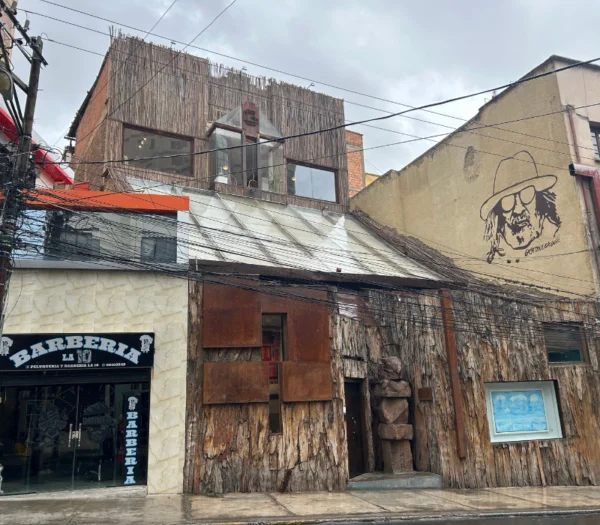
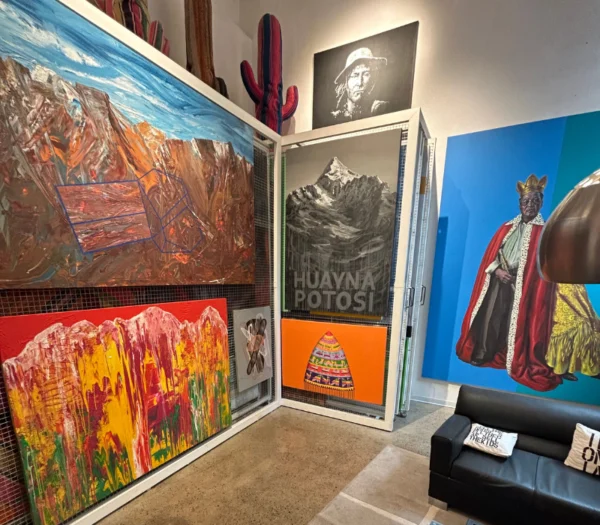
La Paz’s art world is having a moment, and Salar and Neo galleries sit at its centre, showcasing work by Bolivian and Latin American artists that is rigorous, surprising, and deeply embedded in place. Through our friendship with the Ugalde family, custodians of one of the city’s most significant private collections and intimately connected to the legacy of the late Gastón Ugalde, the visionary artist sometimes called the Andean Warhol, a visit here carries the warmth of personal introduction. Selected works from the Ugalde collection are available through the Aracari Shop.
3:00 PM | Private Encounter with Ximena & Optional Golf at La Paz Golf Club
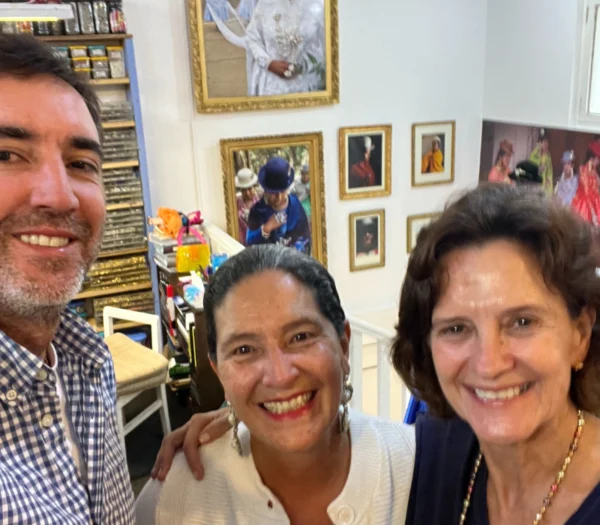
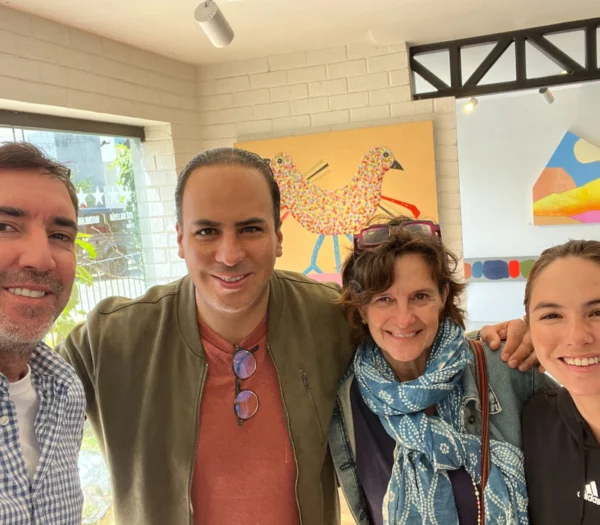
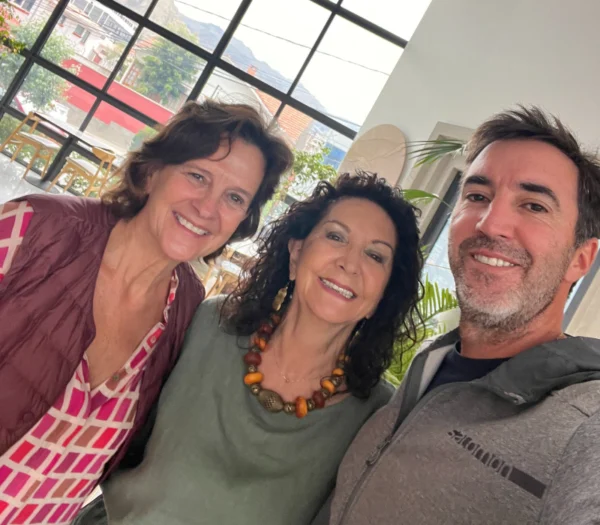
Few experiences in La Paz are as memorable as an afternoon with Ximena Alvarez. An art collector of rare discernment, Ximena’s home is also her gallery, contemporary works alongside indigenous pieces, each with a story she tells with the ease of someone who has lived alongside them for years. Over coffee or a glass of wine, she offers a view of the city’s cultural life that no guidebook could replicate.
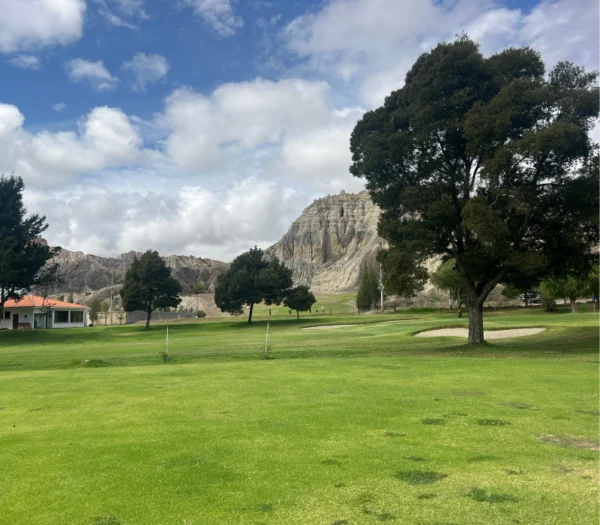
For those who want to stretch their legs afterward, the La Paz Golf Club sits nearby, the highest golf course in the world at 3,300 meters, set against a backdrop of Andean peaks that renders the game almost beside the point. Almost.
8:30 PM | Dinner at Ancestral & Meeting the Chefs Redefining La Paz’s Food Scene
End in the place that, more than anywhere else, captures what La Paz’s food scene has become. Ancestral, recently spotlighted by Condé Nast Traveller, is built around open-flame cooking, drawing on ancient Andean technique and restless modern imagination in equal measure. One signature dish reinterprets the anticucho, the beloved beef-heart skewer that has fed La Paz’s late nights for generations, as a pommes soufflée filled with chili, peanuts, and heart ham. It is the kind of dish that could only come from here.
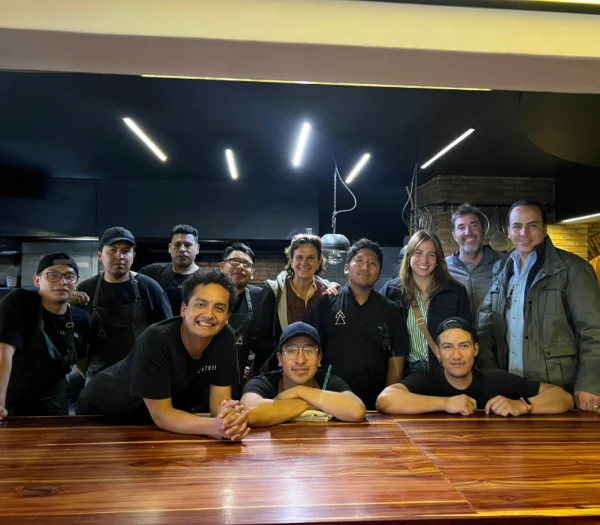
As friends of head chefs Mauricio López and Sebastián Giménez, we can offer something beyond the reservation: a moment behind the pass, a conversation about what drives them, a glimpse into the kitchen where it all begins.
Those for whom food is a primary language may also want to visit Arami, the first solo restaurant from Marsia Taha, Latin America’s Best Female Chef 2024. Named from the Guaraní for “shard of heaven,” Arami honors Bolivia’s Amazonian heritage and the biodiversity of its indigenous communities. Marsia also leads foraging excursions for those who want to follow the ingredients back to their source.
Ready to experience La Paz?
As your 48 hours draw to a close, what lingers is not any single meal or view but the cumulative sense of a city that gives more the closer you look. La Paz rewards the curious and the unhurried, and those fortunate enough to have the right people to guide them through it.
That is what Aracari offers: not an itinerary, but an introduction. To the chefs, the collectors, the designers, the friends, the brilliant Bolivians who make this city what it is. Get in touch today with our luxury travel designers, and let us show you La Paz as it deserves to be seen.