

Taquile Island
On a recent visit to the expansive and picturesque Lake Titicaca, James and I were rewarded with a visit to a community unlike any other that we had experienced before. Although much of the area is associated with inauthentic gimmicks aimed at attracting tourists, as Marisol described in her post, “Trip Report: Lake Titicaca,” we were afforded the opportunity to spend some time learning about the intriguing island community known as Taquile.
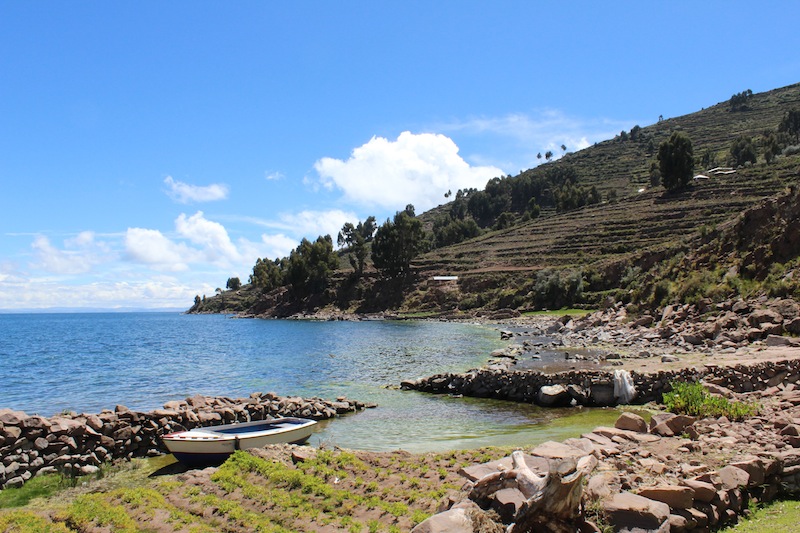
Departing from the pier in Puno, James and I traveled on a boat bound for Suasi Island Eco Lodge. The warm rays of the sun, the cool breeze of the lake, and the gently rocking of the boat were mesmerizing and complemented the tranquil views of the shoreline, the Andean ducks, and the passing boats. Following a two-hour boat ride, we arrived to the pier, where members of the community welcomed us with a handshake and a smile.
During our visit, our guide Maria, with the help of one of the community members, explained the various aspects of the Quechua-speaking people living here – people who are able to successfully fuse their ancient Inca traditions with modern technology. We listened intently as they described the Inca communal laws which they live by as well as the rudimentary process of farming potatoes, quinoa, barley, and other agricultural products, yet we were shocked when Maria explained that the islanders opted to use solar energy as their power source.
There were also various demonstrations during our visit. One volunteer showed us how they use the natural flora to create a very important household item: laundry detergent. They produced this powerful and natural cleaning agent by grinding a particular cactus in between two stones, yielding a frothy and green mixture that is then strained and diluted with fresh water from the lake. Following a brief agitation of the grimy sheep’s wool in this mixture, our demonstrator pulled out a handle of the white, cottony fibers to reveal the transformation.
Perhaps the most impressive part of our visit was the textiles that the men and women produce there, with their intricate details and deeply symbolic colors and patterns. Beginning at the ripe age of 7, girls begin weaving and boys knitting without ever using patterns, as their memorized handicraft skills would later determine whom they would marry, or not marry, in the future. Each piece represented so many things to the artisan, and the knowledge and years of practice that was unfolded in each one was nothing short of spectacular.
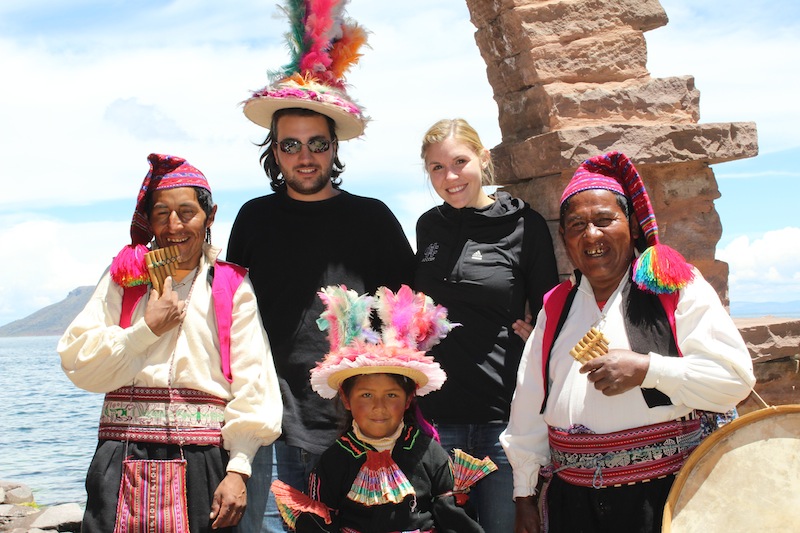
Before our departure, two traditionally clad older men and a young girl delighted us with music and dancing, playing drums and flutes and spinning and dancing in unison. Just as I was taking some shots of the action, the young girl grabbed my hand to join in!
Following a photo op and a look through the little shelf of handmade textiles for sale, we said our goodbyes to the Taquile community and headed on our way – aboard the roof of the boat.