
The Chan-Chan archaeological site is a highlight of Peru’s Moche Route,. The complex was the capital of the Chimú civilization from AD 900 to 1400. Located about 5 kilometers (about 3 miles) west of Trujillo, it was built around AD 1300 and covers about 28 square kilometers (11 square miles), making it the largest mud city in the world.
UNESCO World Heritage Site Chan Chan
The city of Chan Chan was built out of adobe (or bricks of dirt). Built by the Chimu people in about 1300AD, Chan Chan is close by to the modern day city of Trujillo, an area rich in pre-Columbian history and home to many thousands of years of civilisation.
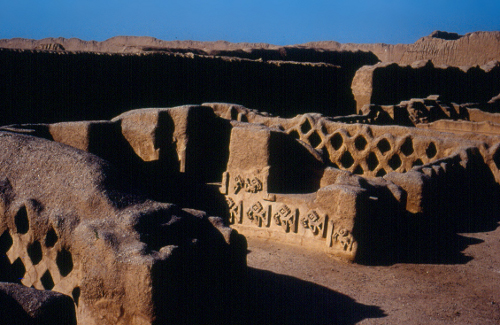
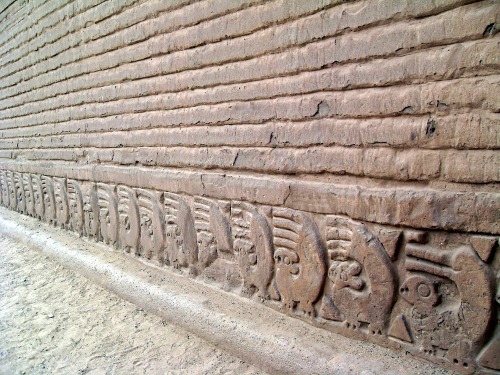
Carved motifs
Arguably the most striking features of the city’s impressive architecture are the brilliant designs and motifs carved into the adobe bricks. These represent birds, animals and figures as well as following intricate horizontal and vertical stepped patterns. The motifs depict everything from customs, religious mythology and constellations to farming and fishing seasons.
On the outskirts of the citadel, there was an area where the people were mainly engaged in farming, craftsmanship, and fishing—the main activities that sustained this northern Peruvian civilization.
Chan Chan in its heydey
In its heyday, Chan Chan consisted of administrative offices, ceremonial altars, storerooms, military bunkers and vast reservoirs that still stand today. Although the site is no longer as splendid as it must once have looked, visitors can still marvel at the architecture of the palaces: huge constructions of clay and sand measuring up to 15 metres in height.
Visiting Chan Chan
Chan Chan was declared a UNESCO World Heritage site in 1986. Chan Chan is one of the many fascinating archaeological sites along the Moche route (the Chimu Empire descended from the Moche).
Contact us today to speak to an expert travel planner about visiting Chan Chan.
