
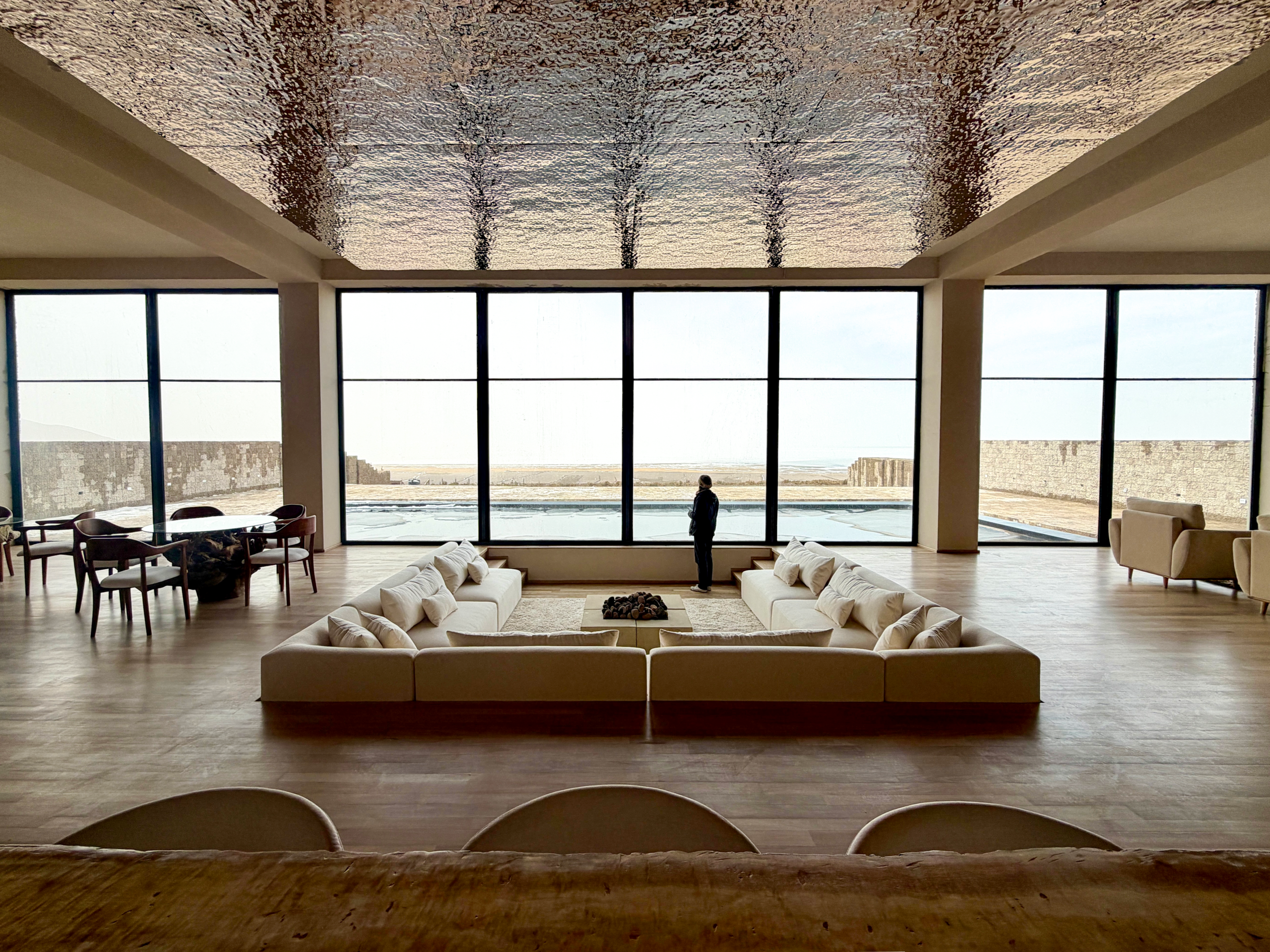
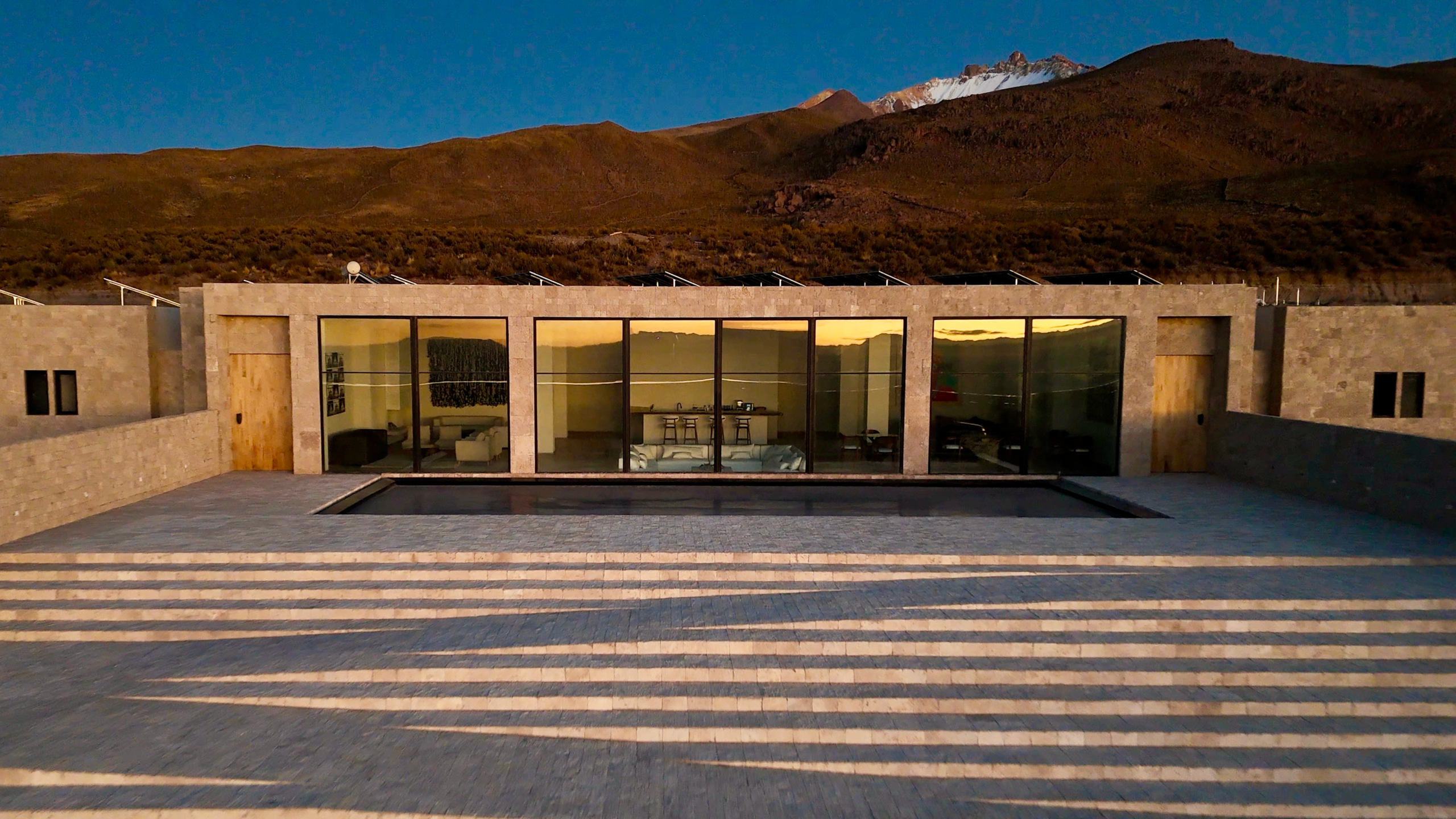
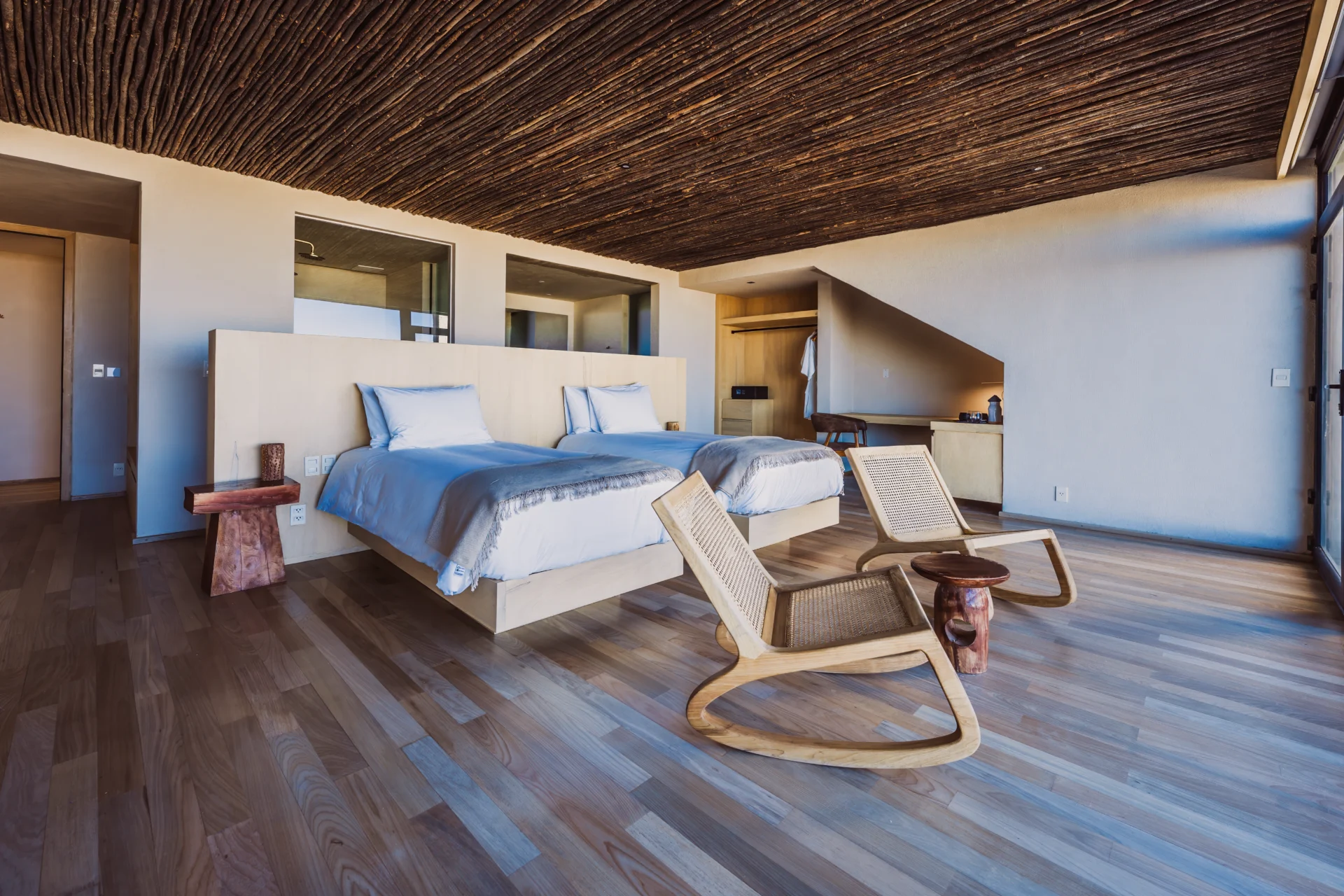
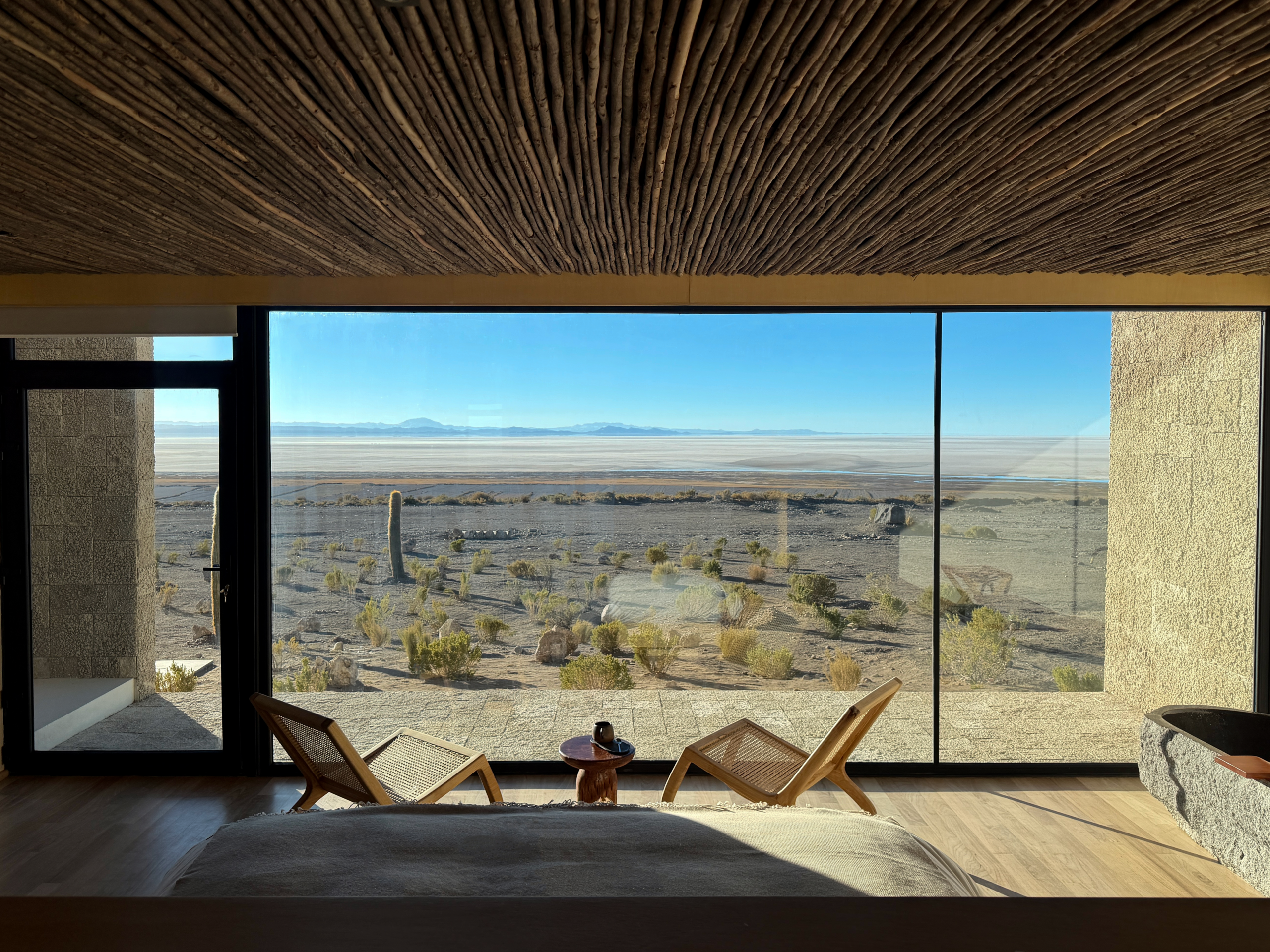
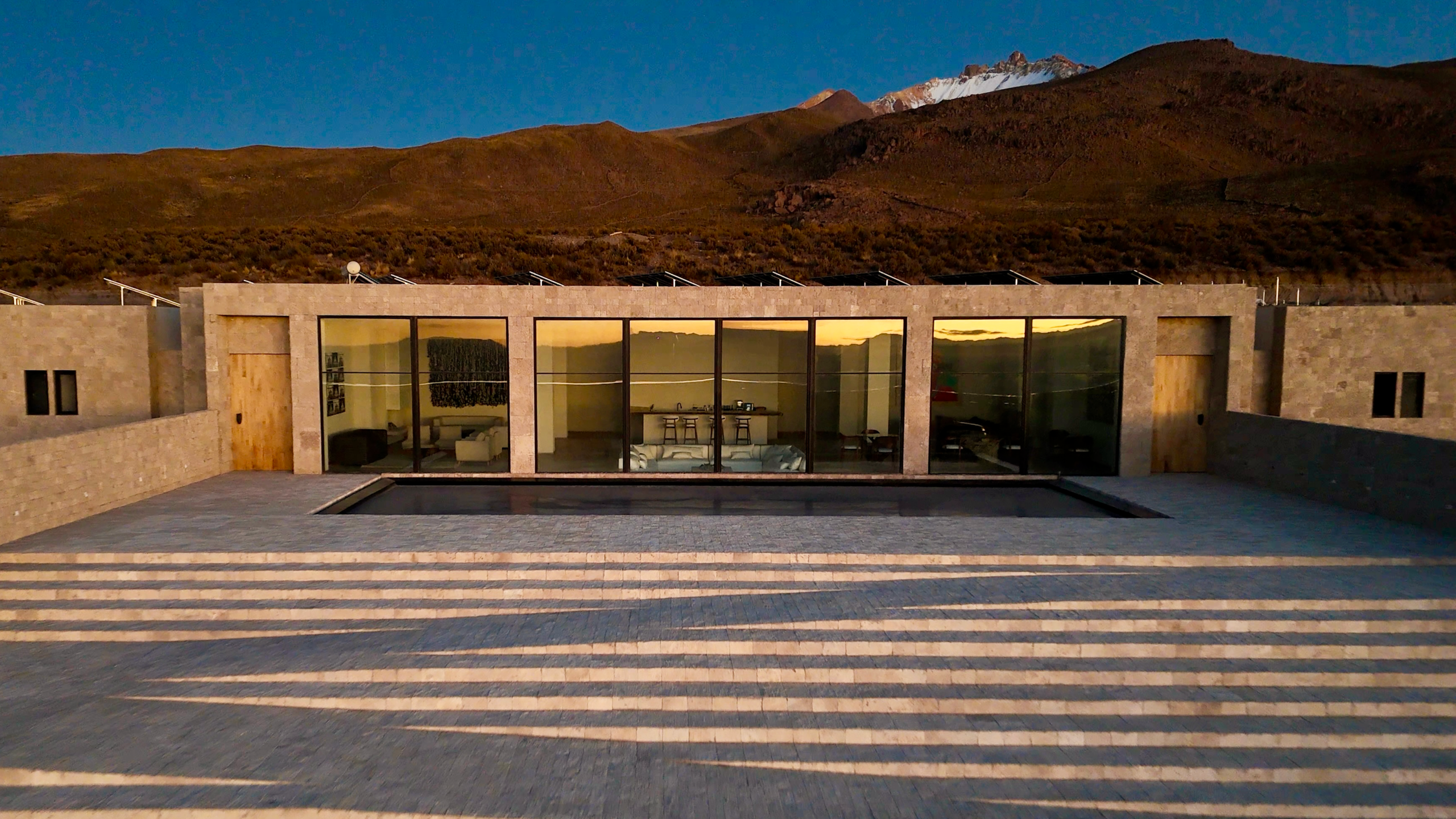
Ten suites at the foot of the Tunupa volcano, Casa Gastón faces the largest salt flat on earth. Marisol Mosquera in conversation with Mariano Ugalde on the first hotel-museum in Bolivia, and the last work of the artist who imagined it.
I met Gastón Ugalde nearly twenty years ago, in London, at an art fair in Earl’s Court. I had been traveling to Bolivia for years by then, trying to build journeys worth taking, and finding almost nothing on the Salar de Uyuni that felt considered.
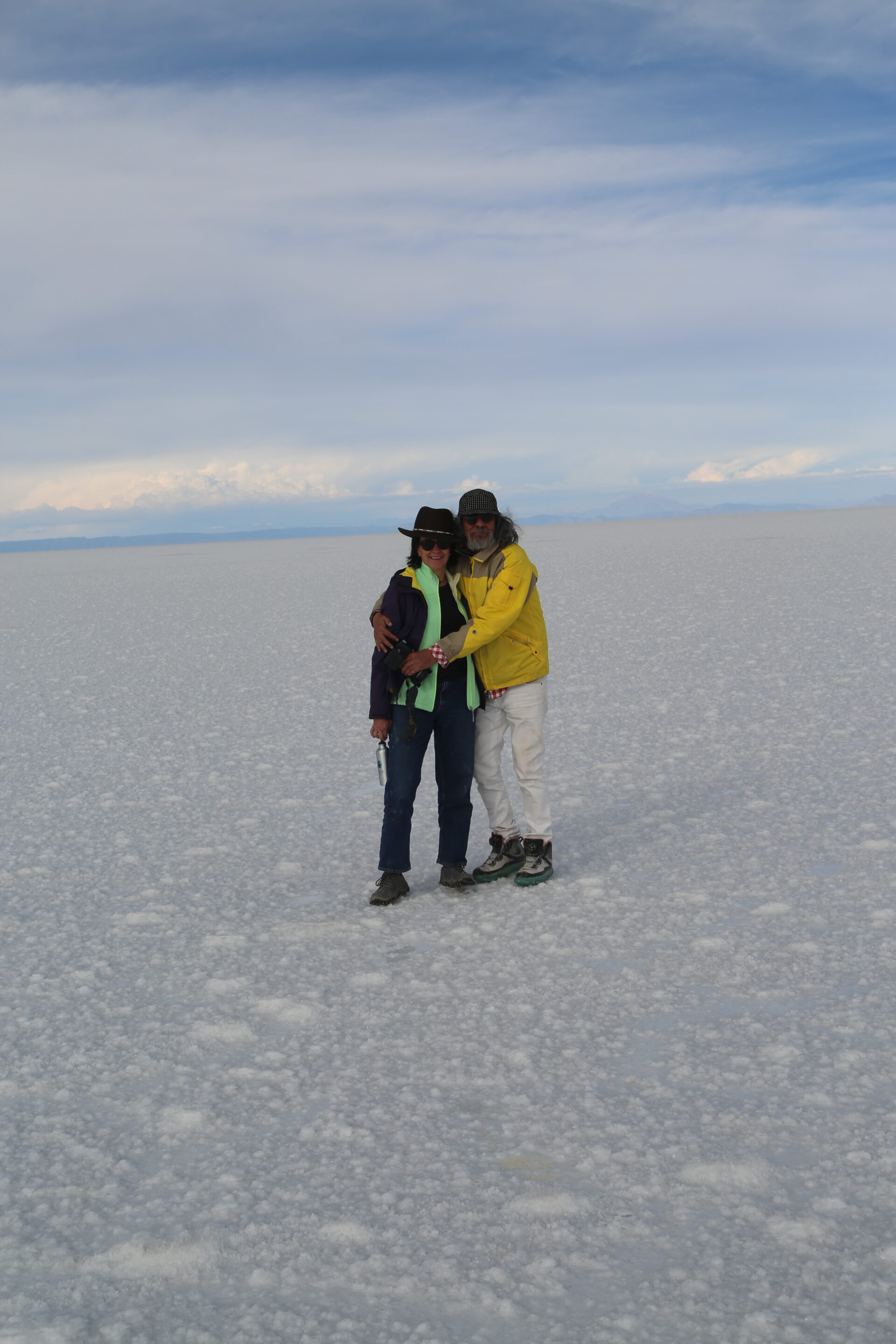
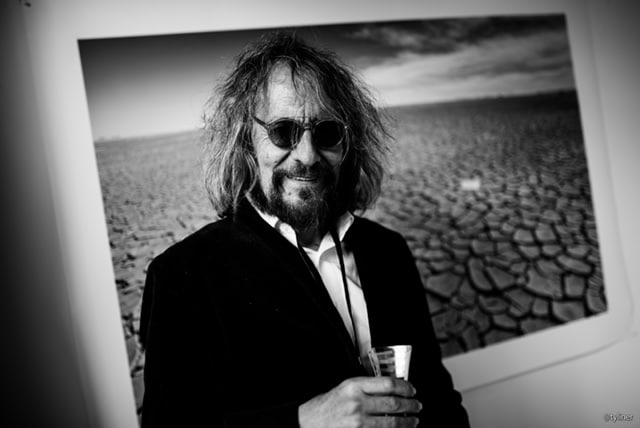
It was cold, and rough, and beautiful in a way no one had yet made room for. Then I walked into the Pinta fair and stopped in front of a stand lovelier than anything else in the hall. It read SIART Bolivia, and in the corner, among the work, sat a man with a beard, wild hair, and a wide hat. That was Gastón. We started talking, and we didn’t really stop for the next two decades.
Gastón is sadly no longer with us. But his vision stands at the foot of the Tunupa volcano, on the northern rim of the Salar, ten suites facing the largest salt flat on earth. Casa Gastón is the first luxury hotel-museum in Bolivia, his final work, carried through by his son Mariano and the family.
I came in August as one of their first guests. One afternoon, Mariano and I sat and talked about his father, about the salt desert that never let him go, and about what it takes to turn an artist’s life into a place you can stay.
The salt Gastón never stopped returning to
Bolivia was Gastón’s great subject, and Mariano puts it plainly. “If we were to pinpoint one thing about Gastón’s life and Gastón’s work, it was his love for Bolivia. That’s what you see also in his artwork, because if you’re not that familiar with his practice, you would think that it’s ten different artists. But the common thread amongst all his work, be it painting, photography, sculpture, installation, land art, was his love for Bolivia. The Bolivia in him.” At the center of it was the Salar.
“The salt desert played a vital role in all his work. It was his main source of inspiration, and if he had to pick one place, it would be this place.”
He first came in the late 1960s, when almost nobody did. “He slept on the floor when there was nothing: no hotels, no hostels, nothing. Uyuni was a major train stop, but no one would even get out of the train to see the salt desert. Locals knew there was a white plain, but they wouldn’t think much of it.”
Gastón got off the train. He photographed it first in black and white, and then, Mariano says, “when he sees how color reacts to film in photography at this white landscape, he realizes it was a photographer’s paradise.” He came back, and came back again.
“He kept saying that there’s no time when the Salar is the same. People would often ask him, ” Don’t you get tired of going back to the Salar? Because he would go sometimes on a Monday, come back on a Tuesday, and then come back again on Wednesday just to take one photograph. That’s how much he loved this place.”
Slowly, and without ever intending to, he turned a blank space on the map into a destination. He brought friends first, then the wider world. In 2020, Vanity Fair gave him its Changing Your Mind in Travel award. “It spoke to how one person, with a different vision, not necessarily related to tourism, can change or position a destination. And that’s exactly what Gastón did with the Salar.”
One artist, every medium
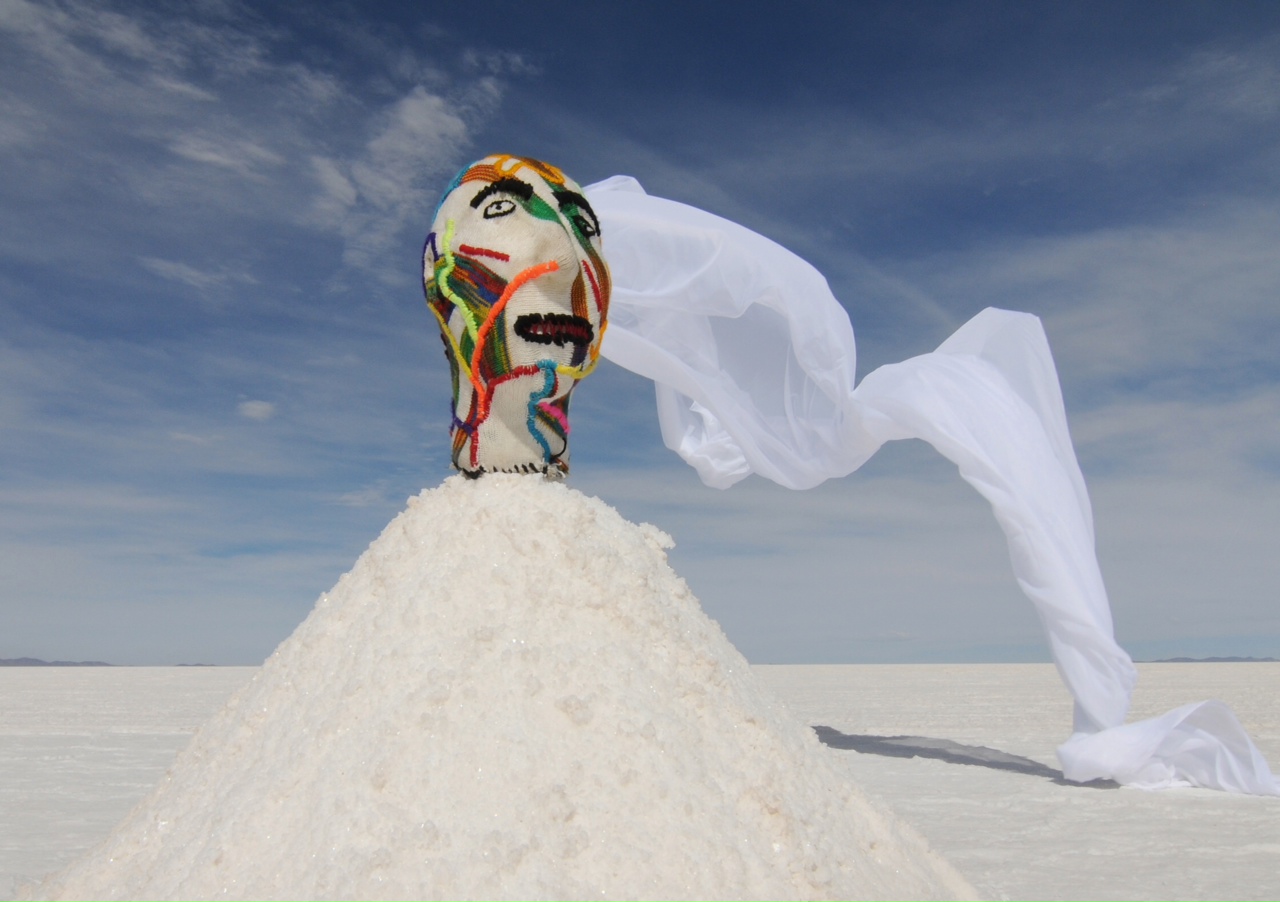
He began with photography and studied with Ansel Adams in the sixties, but he could not live on it.
“Photography was looked down upon by painting and sculpture. It was never considered a real medium, so to speak. So he couldn’t really sell his photographs or make a living as a photographer, and he had to teach himself how to paint. He had to put food on the table, and that’s what sold.”
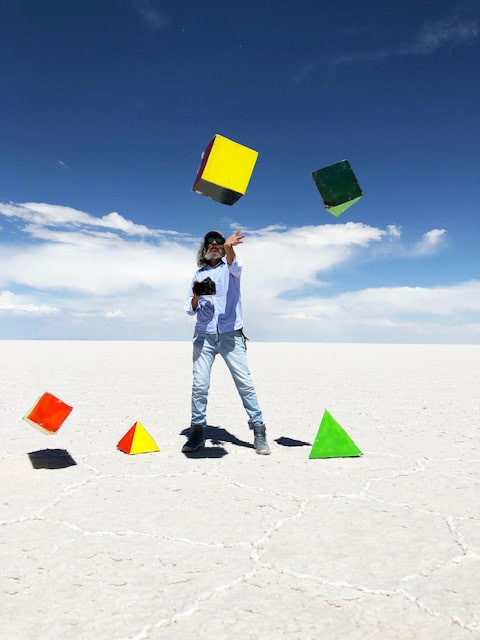
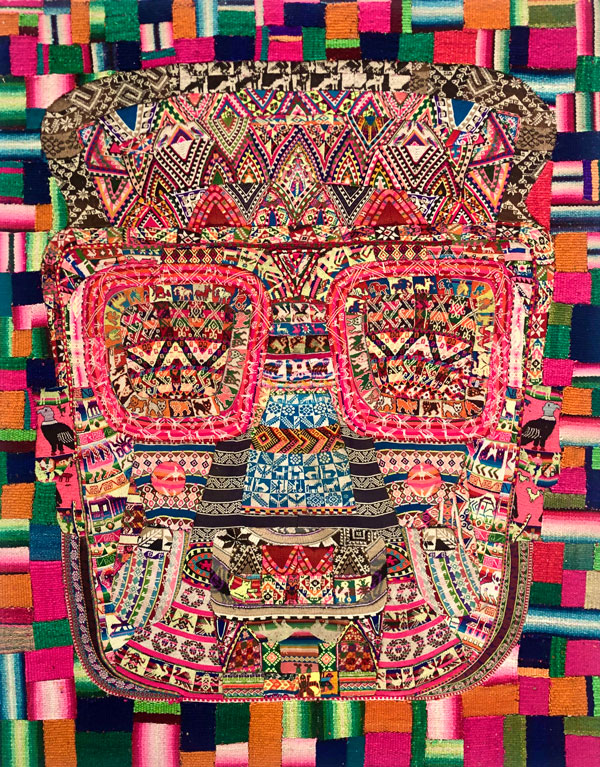
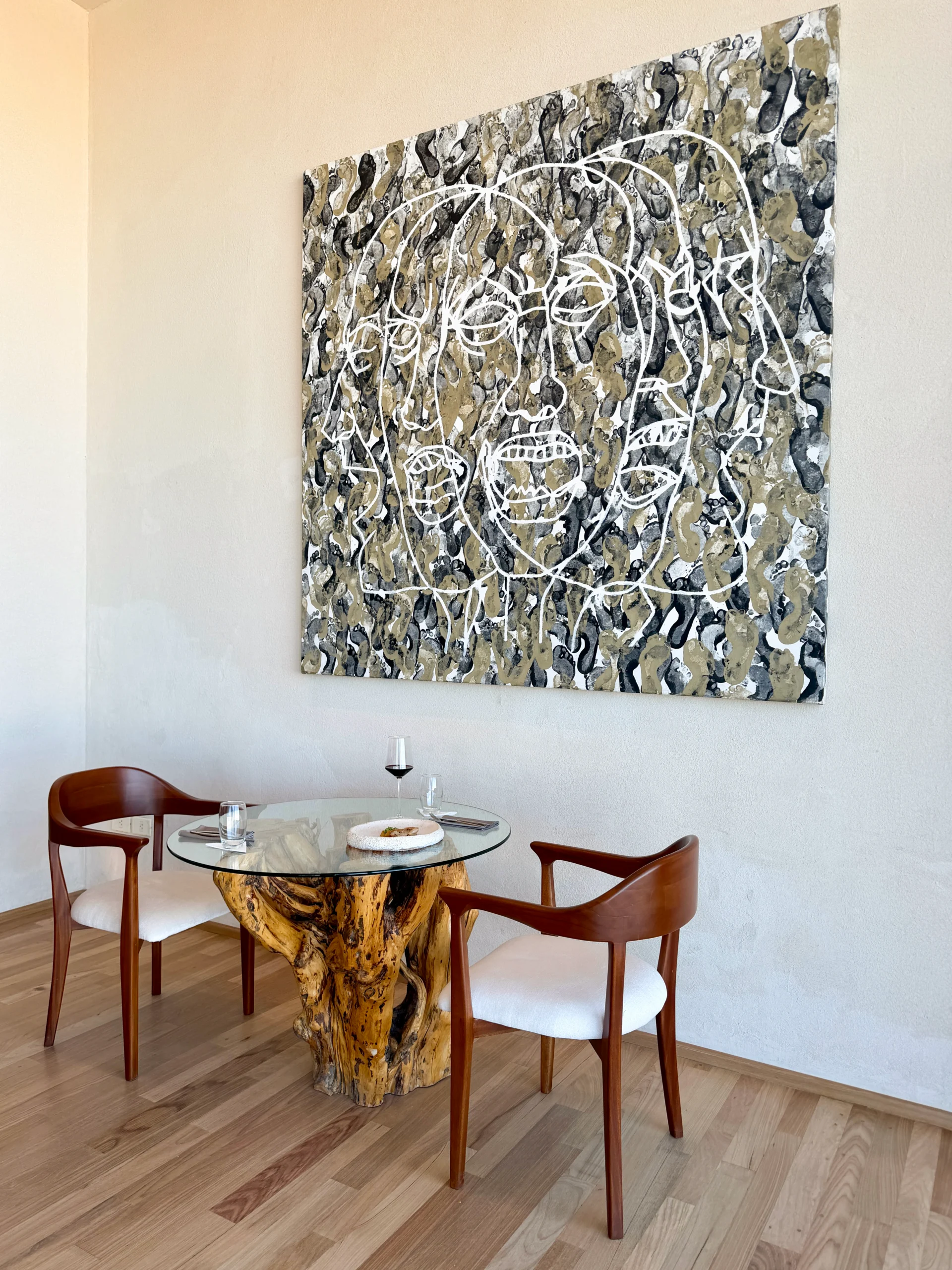
He painted for twenty years out of necessity, and never stopped circling back. Mariano describes a man who could not stay with one thing: painting one day, photography the next, video art the day after, and a land art project the day after that. He was, above all, a great believer in installation.
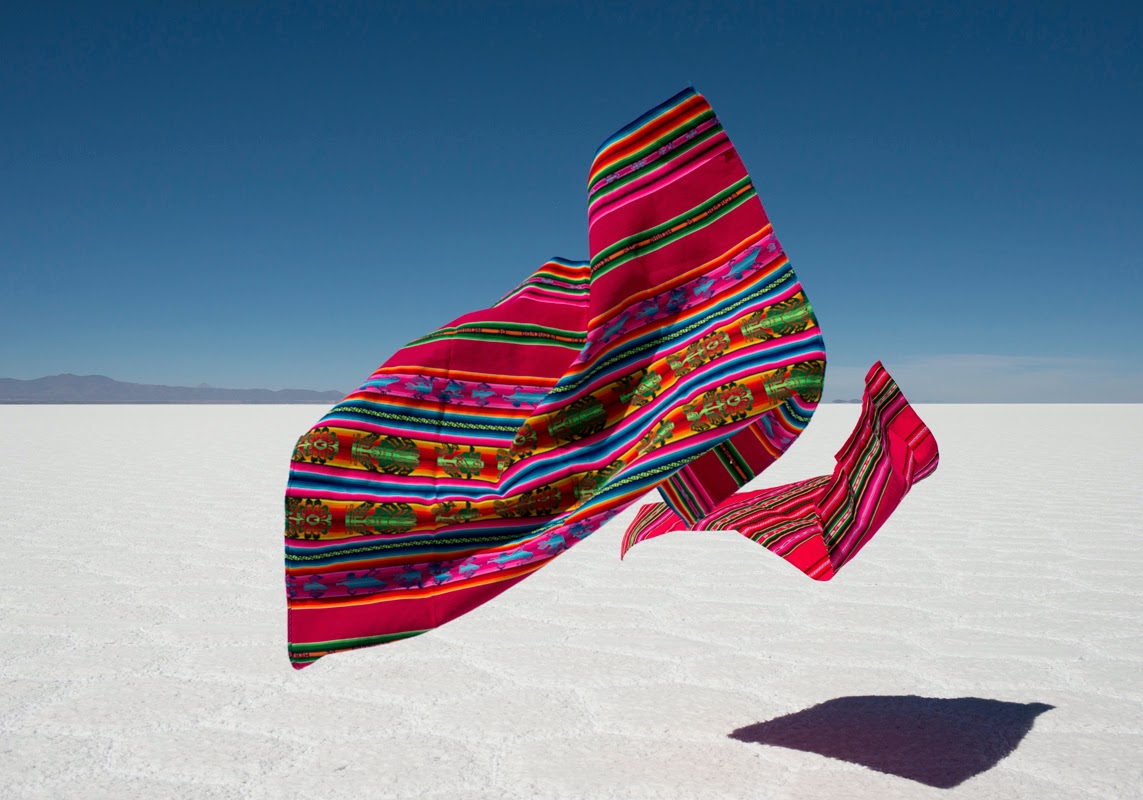
“I don’t think there’s one thing that he didn’t really do. He did collage as well. He did print, textile art, a lot of textile. He was an avid textile collector. And he considered himself a master printmaker. He was a printer for a long time, an engraver.”
An indomitable spirit
In the welcome note that waits in every room, Mariano describes his father as an indomitable spirit. Ask him what he means, and the answer is about the man before the work.
“Gastón had this love for life that was infectious. He was a very generous and kindhearted man, and I think that’s the biggest legacy. We talk about his art, his work, but the person behind Gastón was an amazing man. I keep hearing stories from people about how he had touched them, or taught them something, or did something for them, that I didn’t even know about.”
“He was irreverent. He did everything his way. There’s nothing too big for him. That’s the biggest legacy he left, and the teaching, for me, for my siblings, for his grandkids. Always think big, never settle, always think positive. Everything is possible.”
When I think of him, I think of something he said to me more than once, which Mariano heard all his life too.
“My dad always said that that’s the beauty of art. It connects you with people that have the same sensibility as you. It’s not about the money. It’s not about a transaction. It’s about what moves you in life.” It was true of the two of us, meeting across a booth in London. It is true of the hotel his family has made.
“Always think big, never settle, always think positive. Everything is possible.”
The last piece Gastón made
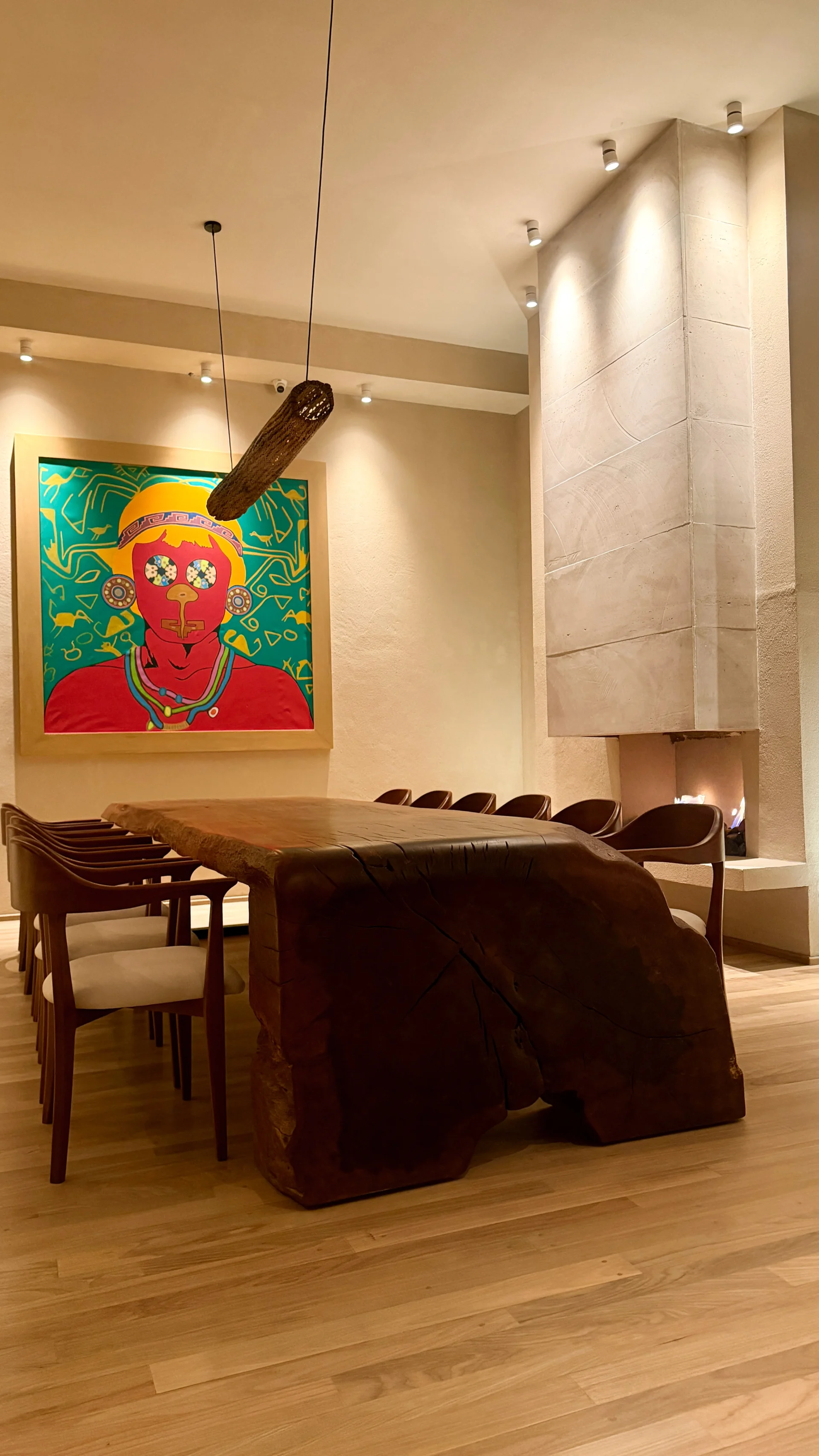
“This is the farthest thing from a conventional hotel,” Mariano says. “How we do things, how we think, how we think things should be done. We try to keep that ethos of Gastón. And the ethos was that all his life, all his art, everything is intertwined.”
There is a circularity to it he would have liked, and Mariano feels it. “This place was his inspiration, and now this inspiration has come to life.” People often ask him what the last piece his father made was.
“That’s a very nice question, because the last piece he did is this. He passed in 2023, and we’re in 2026, and it doesn’t end, because there are a lot of projects that didn’t come to fruition that we will complete. I always say, when an artist dies, the work stays. It’s not as if an accountant dies and the books go with them.”
It is also how the family keeps him near. “In some way we still have him, because we’re still continuing his legacy and living with his art every day, and talking about him every single day. Remembering, multiple times a day.”
The village at the foot of the volcano
Gastón was close to the small community of Jirira, at the foot of the volcano, and what has happened there since is the part of this story Mariano is proudest of.
“Gastón was really close to this community, which had a population of thirty. Now its population is a hundred, and seventy of them are working with us. We hope that continues to grow as the kids of this elderly community come back, because now there’s a whole sense of pride in a region that had nothing before. All they had was royal quinoa!”
For years, people here left to find work. “Many people in this area would have to emigrate to make a living, and now they can have a life here. A very good life, for that matter. There’s no need to chase the Chilean dream.” They usually went to Calama, across the border in the mining north, always meaning to come home to a place that offered them little.
The family has looked to Fogo Island Inn in Newfoundland as the model, a single hotel carrying an entire community. Four years into building here, Mariano speaks of his neighbors as partners rather than staff.
“We’re doing it consciously, and really hand-in-hand. Not looking down upon them, but looking at them as real partners. I think they understand our vision, and they support it fully.” There is ambition in it too. Gastón spent his life showing Bolivia proudly on the world’s stages, and his son wants Casa Gastón to carry that further.
“Us being such a small country, showing in London with all these big shots and showing it very proudly, I think we have all the potential to compete, and to be featured not just nationally or regionally. Why not globally?”
Staying at Casa Gastón
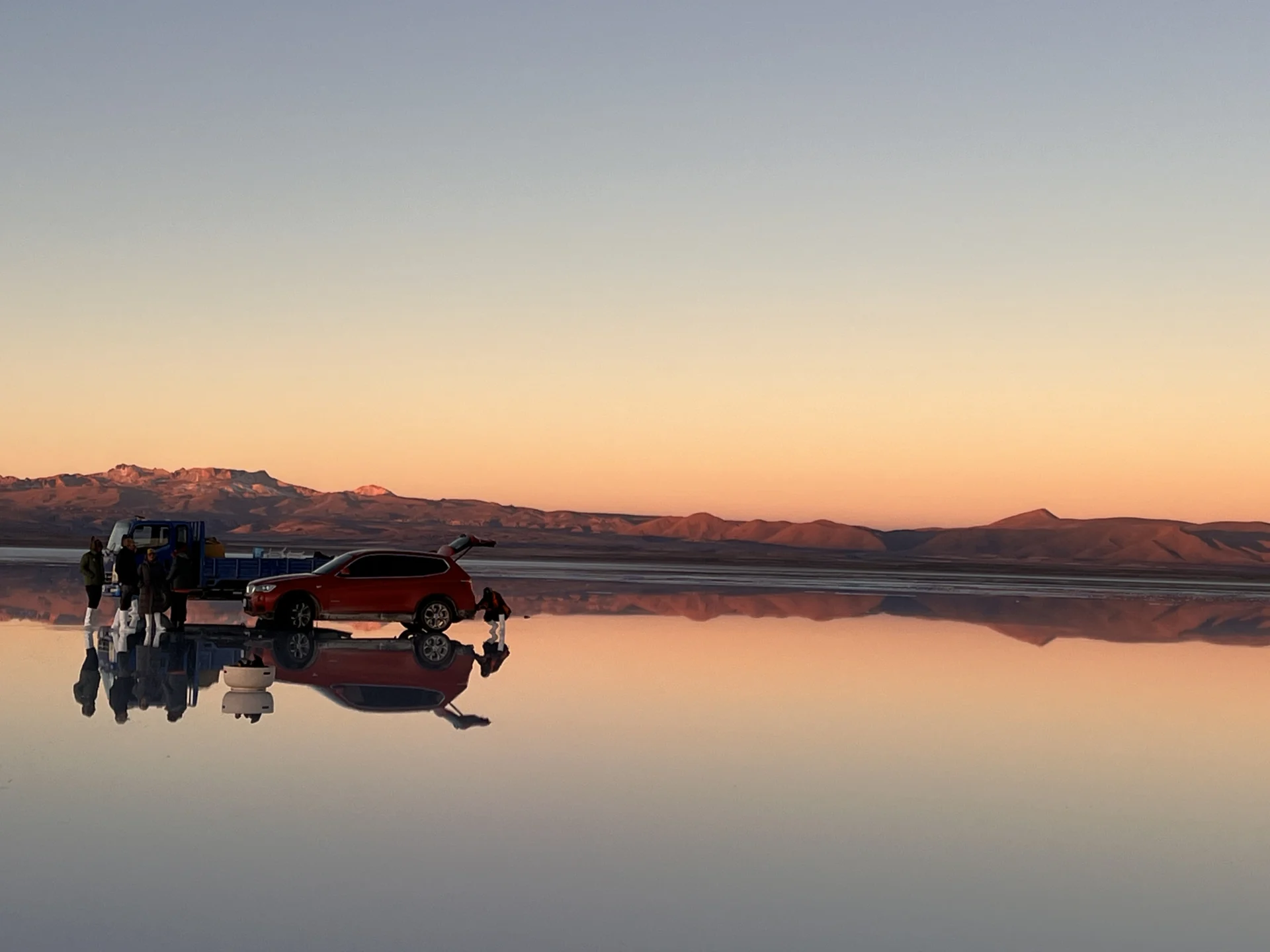
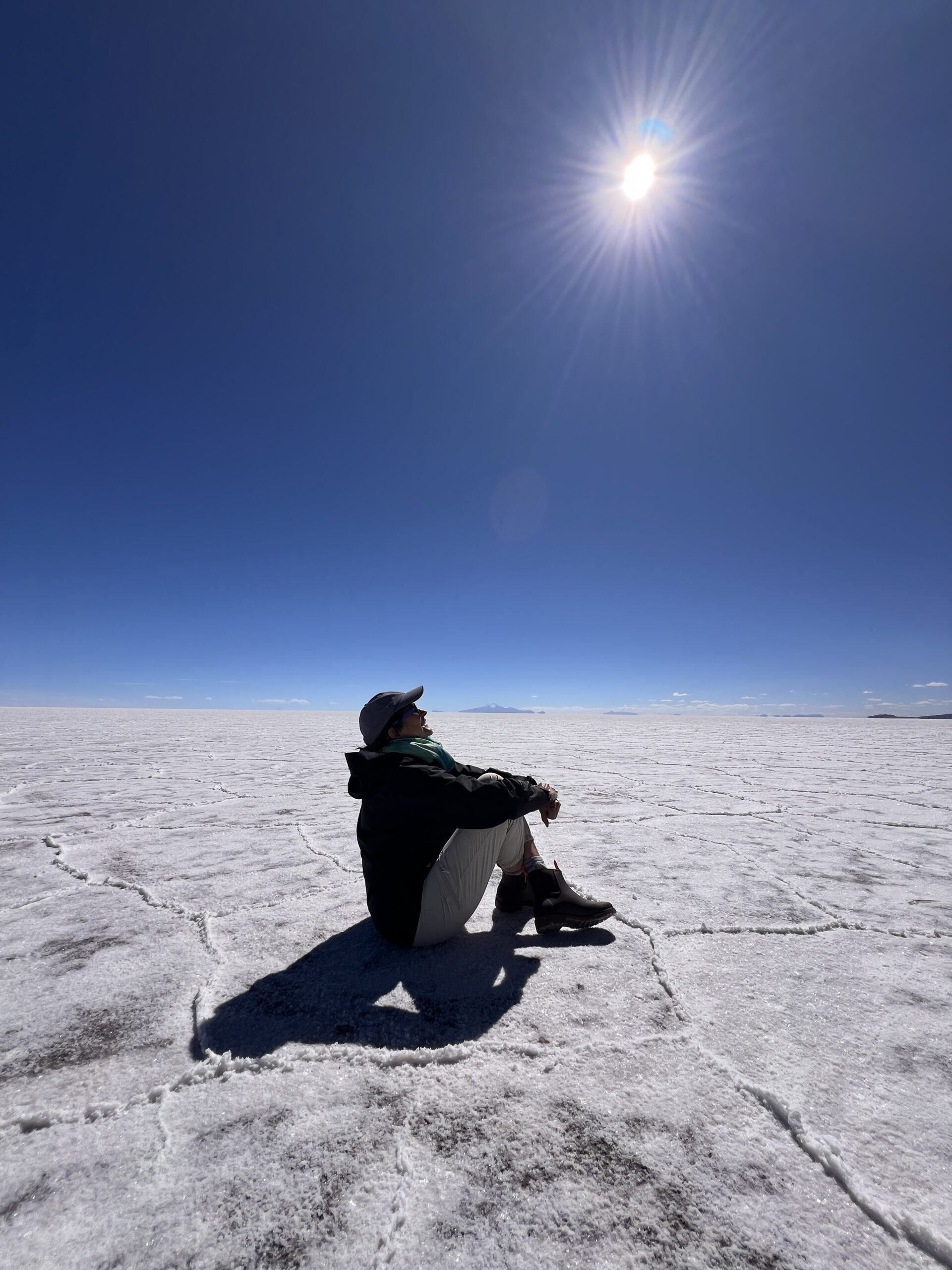
Casa Gastón opened in 2026 at Jirira, on the northern edge of the Salar de Uyuni, its ten suites reached by air into Uyuni and then out across the salt. The flat changes with the seasons, a vast mirror when the rains come between December and April, a floor of white hexagons through the dry months from May, and both are worth the journey.
We build a stay here into tailor-made journeys through Peru and Bolivia, alongside Lima, Cusco and Machu Picchu, as in our fourteen-day Extraordinary Peru and Bolivia. It is, I think, the finest way to stand on the Salar, inside the casa one remarkable man spent a lifetime imagining.
Gastón spent sixty years driving out onto the salt to see how the light had changed since the last time, and never once found it the same. He never stopped coming back. Now there is somewhere incredible to stay when you do.