
Although Cusco receives a lot of attention for its rich history and archaeology, the same could not exactly be said for folk art in the city. The exhibition Cusco: Herencia y Tradicion (Cusco: Heritage and Tradition) sets to redress the balance as I found out at last night’s inauguration at the Instituto Cultural Norteamericano Peruano.
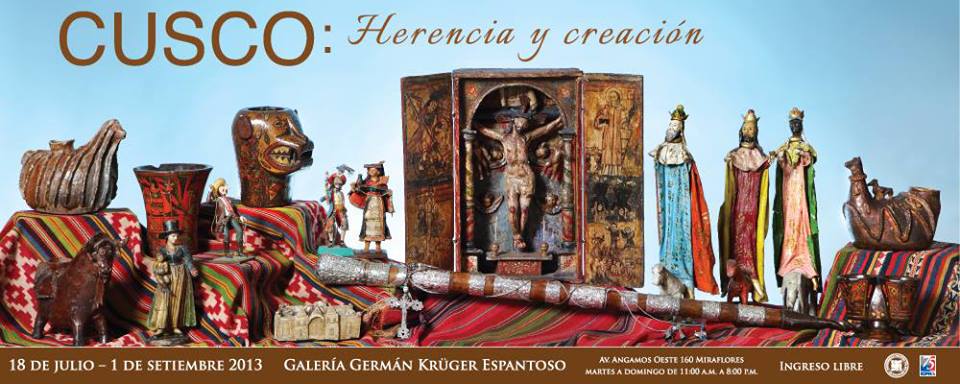
Curated by close friend and collaborator of Aracari Lisy Kuon, the exhibition displays a a wide collection of arte popular – or “folk art” – from the Cusco region over the last 500 years, most of which was produced in the last century. All of the pieces display the rich tradition of art in the region, demonstrating indigenous legacies, syncretism with colonial influences, and how these traditions have been incorporated into the psyche of local people, as expressed through day-to-day arts and craftwork. The pieces have been brought together from museums, universities and private collections – including those of more Aracari friends, notably Mari Solari of Las Pallas and specialist Lima insider John Alfredo Davis.
“The exhibition is divided into three central themes,” detailed Lisy, “The first, religion, as is seen in religious festivals and processions; the second, regarding objects of a magical character, propitiatory of Andean kindness; and, the third, objects of every day use.
“Through the past and up until the present day, the artists of the Cusco region have shown a world of sensibilities, materilised in various forms and expressions as presented through folk art. In this selection we see expressions that have allowed the preservation of fundamental Andean traditions, reinvented throughout the centuries and acquiring new vitality and new meanings in modern times .”
The objects on display are a treasure trove of trinkets, adornments and objects hailing from across the Cusco region. I was particularly impressed with the pieces related to the Corpus Christi festival in Cusco, as well as those from the city’s Santuranticuy market on Christmas Eve – though there are all manner of brightly coloured textiles, blankets, ponchos, stoneworks, ceramics, molds, paintings and sculptures right down to common utensils such as bowls, plates, locks and horseshoes that will captivate visitors to the exhibition.
For anyone visiting Lima with an interest in folk art in Cusco and Peru, and how popular art retains common themes from Cusco’s heritage, the exhibition is well worth dropping by. The show runs until September the 1st at the Germán Krüger Espantoso Gallery at the Instituto Cultural Norteamericano Peruano (between Angamos and Arequipa streets), opening hours are from 11am to 8pm, Tuesday to Sunday. Entrance is free. This is the tenth edition of the investigation of “arte popular” in Peru, a collaboration between the ICPNA and the Ricardo Palma University.