

As you travel through the Andes, a few things might catch your eye: the flash of a snow-capped mountain, a shaggy-haired alpaca or the vibrant clothes of the Andean women. The beautiful skirts you’ll see are called polleras. Their patterns, colors and designs change from village to village, and their story is a fascinating one. We’ve assembled a guide to polleras and where you can purchase one on your next Peru trip.
A pollera is a full skirt made from cotton or wool that is decorated in vibrant embroidery. Decorations often include flowers and local animals. The rounded shape is similar to that of a bird cage, which is where we get the term pollera. Pollo, of course, means chicken.
The Andean pollera
The Andean pollera dates back to colonial times. During Spanish colonization, the settlers brought their European fashion sense along with them. One of the most popular pieces was the long and voluminous skirt that was particularly popular among peasants in Andalusia. Andean women decided to make their own out of alpaca wool. However, they decided to put their own twist on the garment. As such, the result was often more vibrant than its Spanish counterpart.
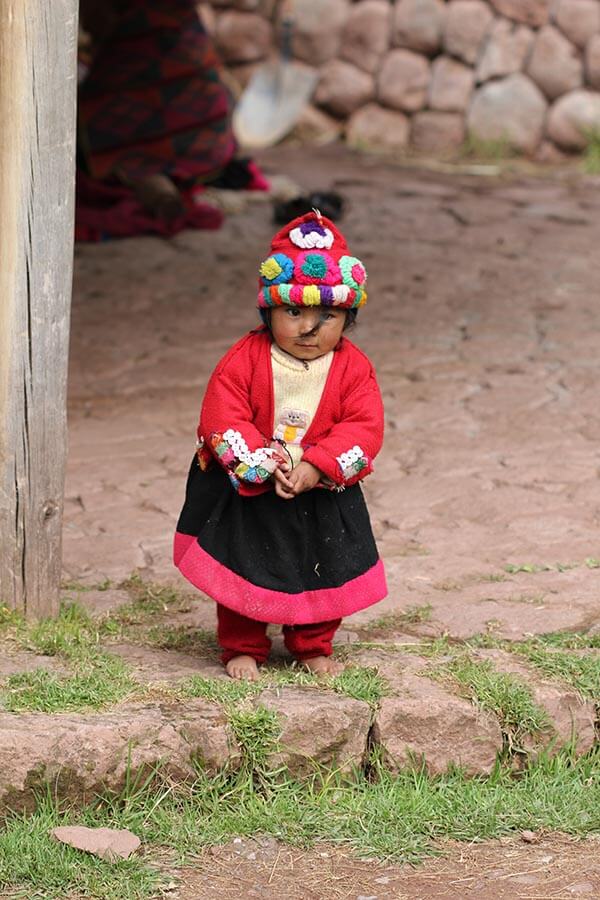
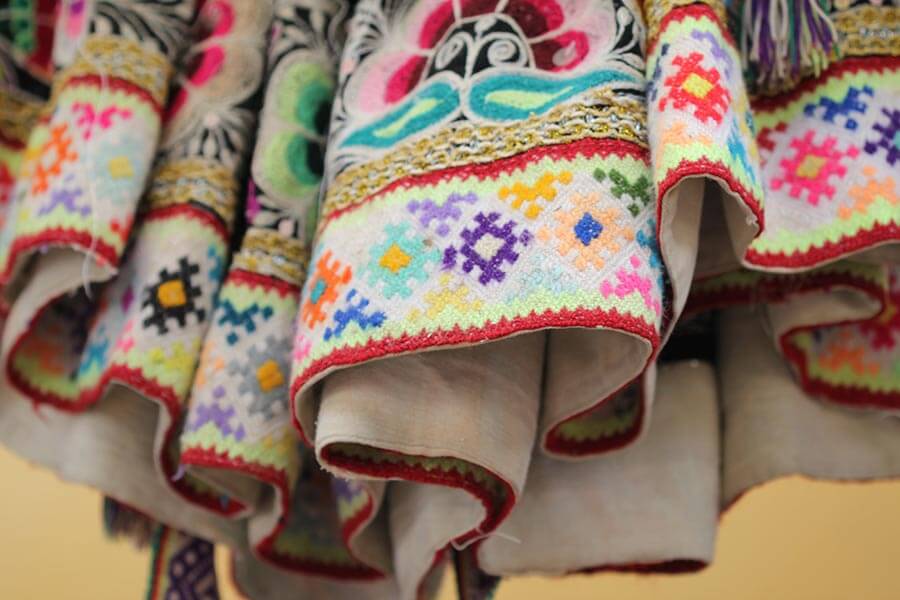
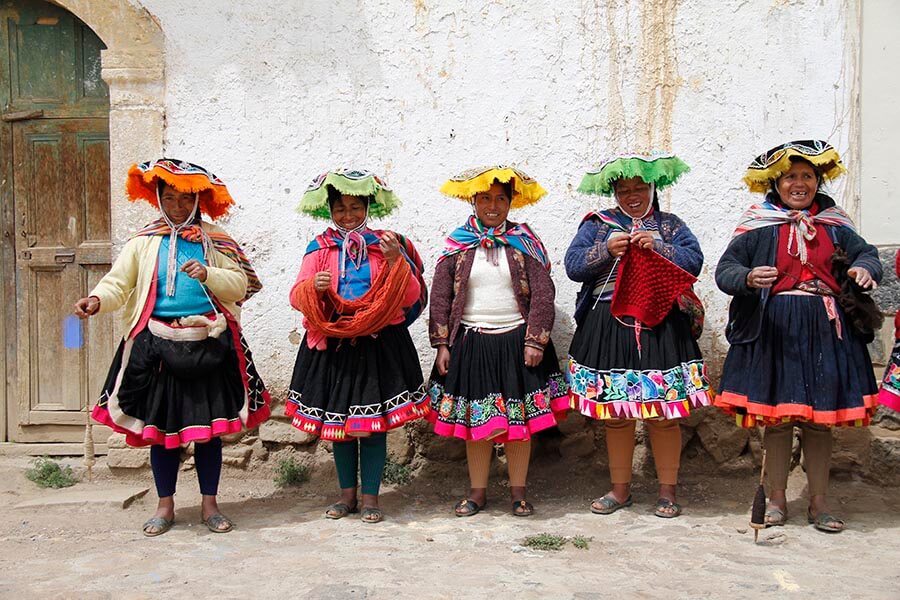
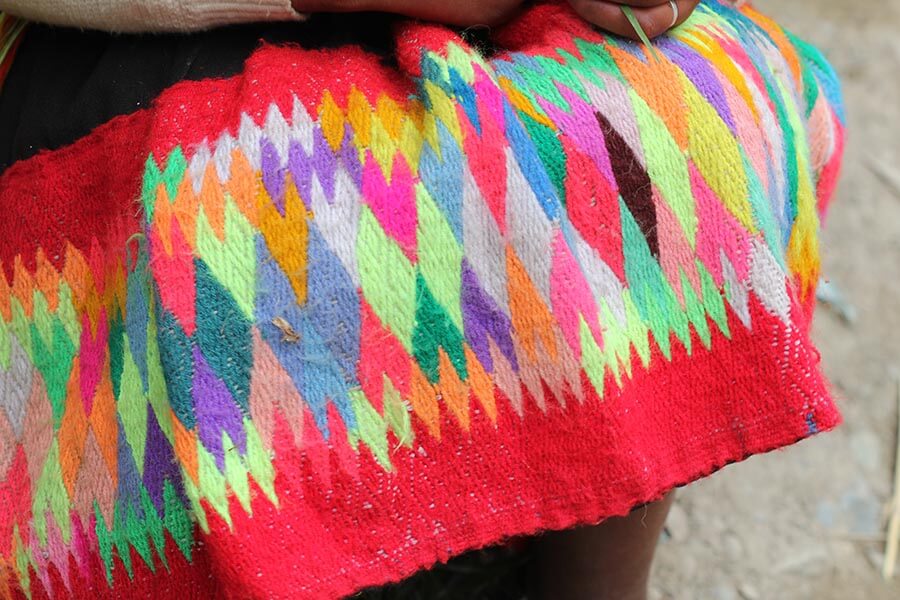
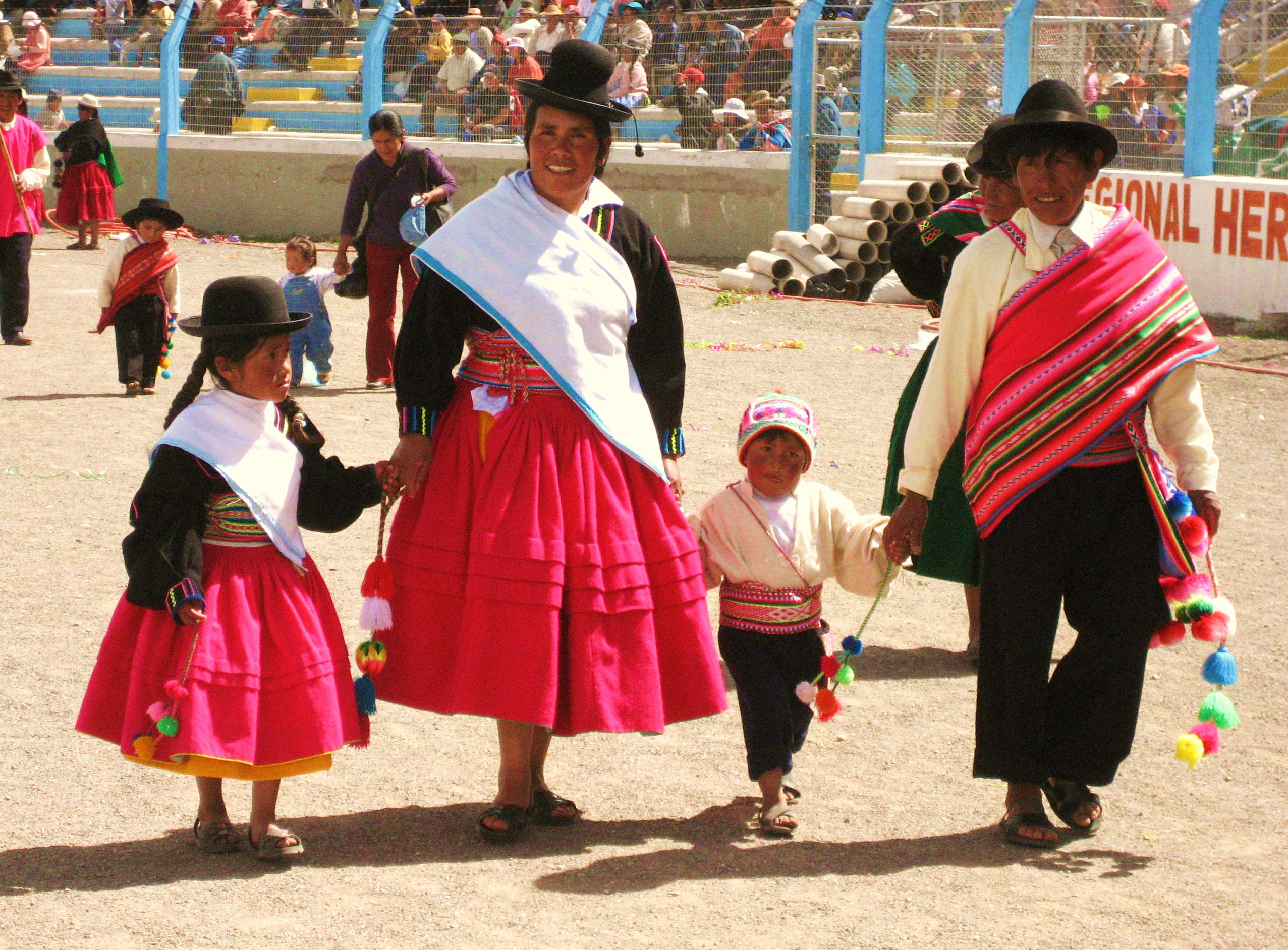
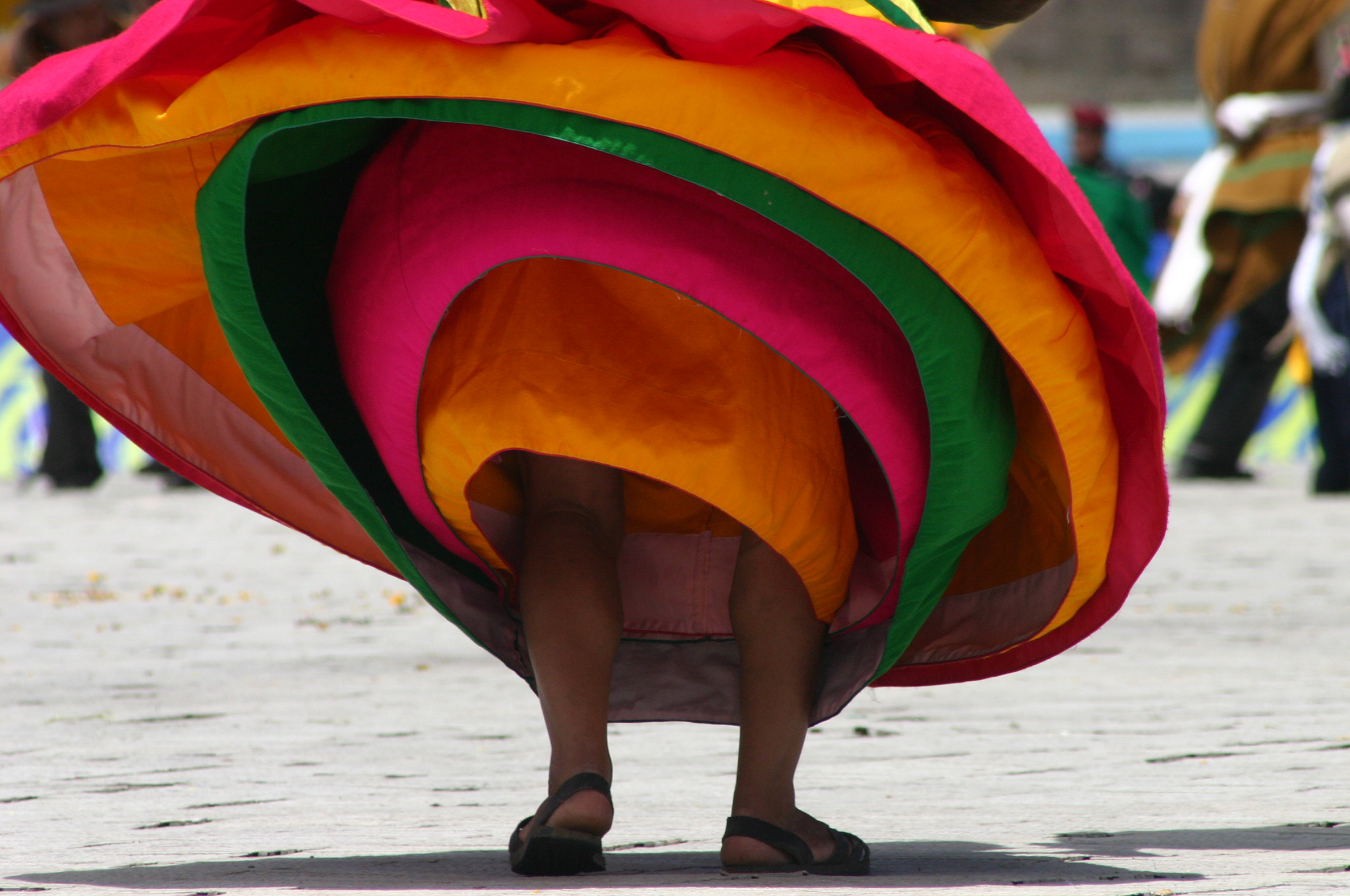
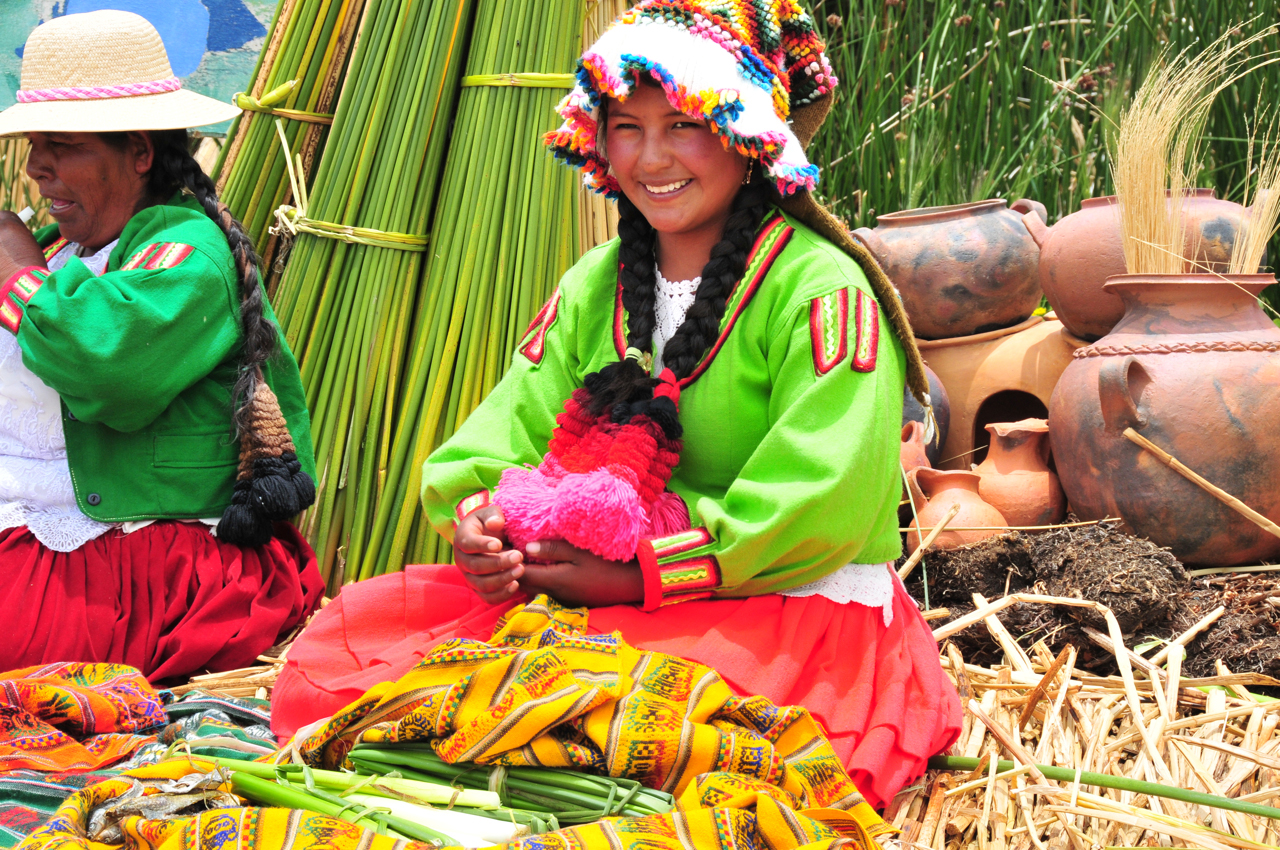
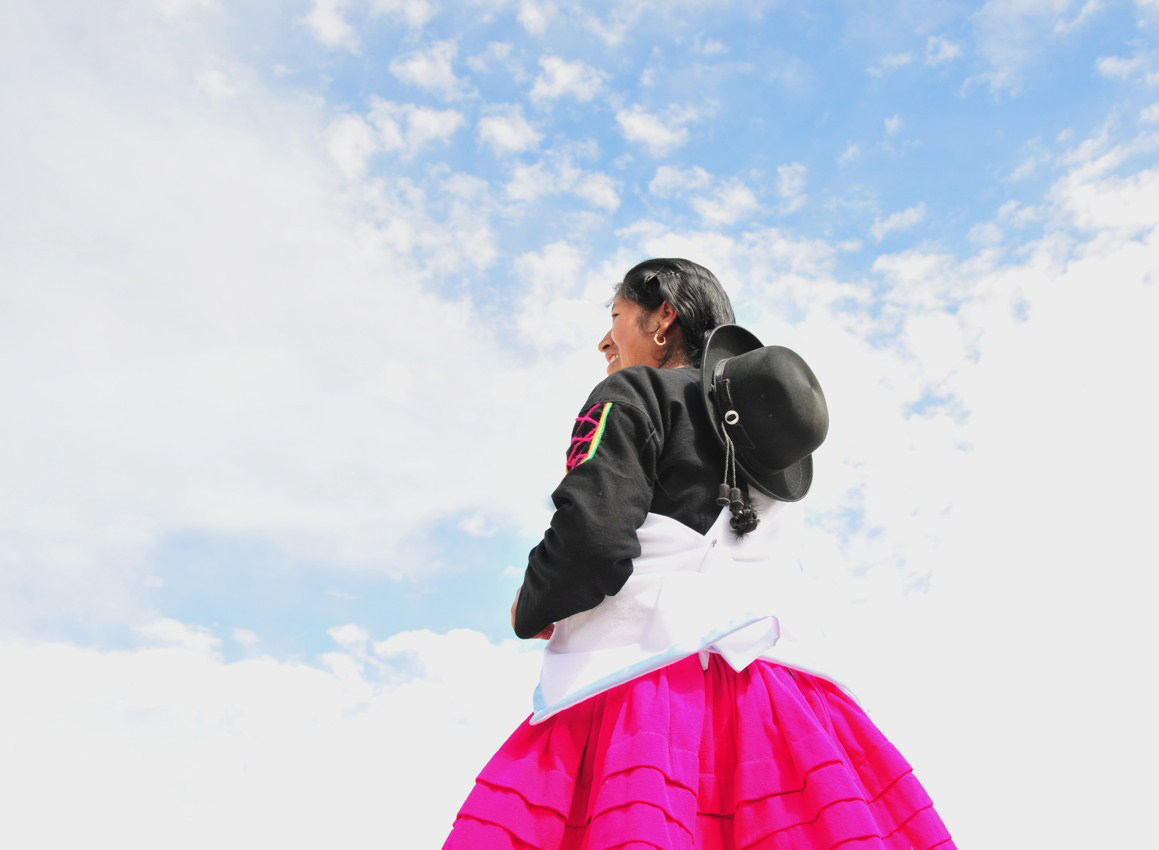
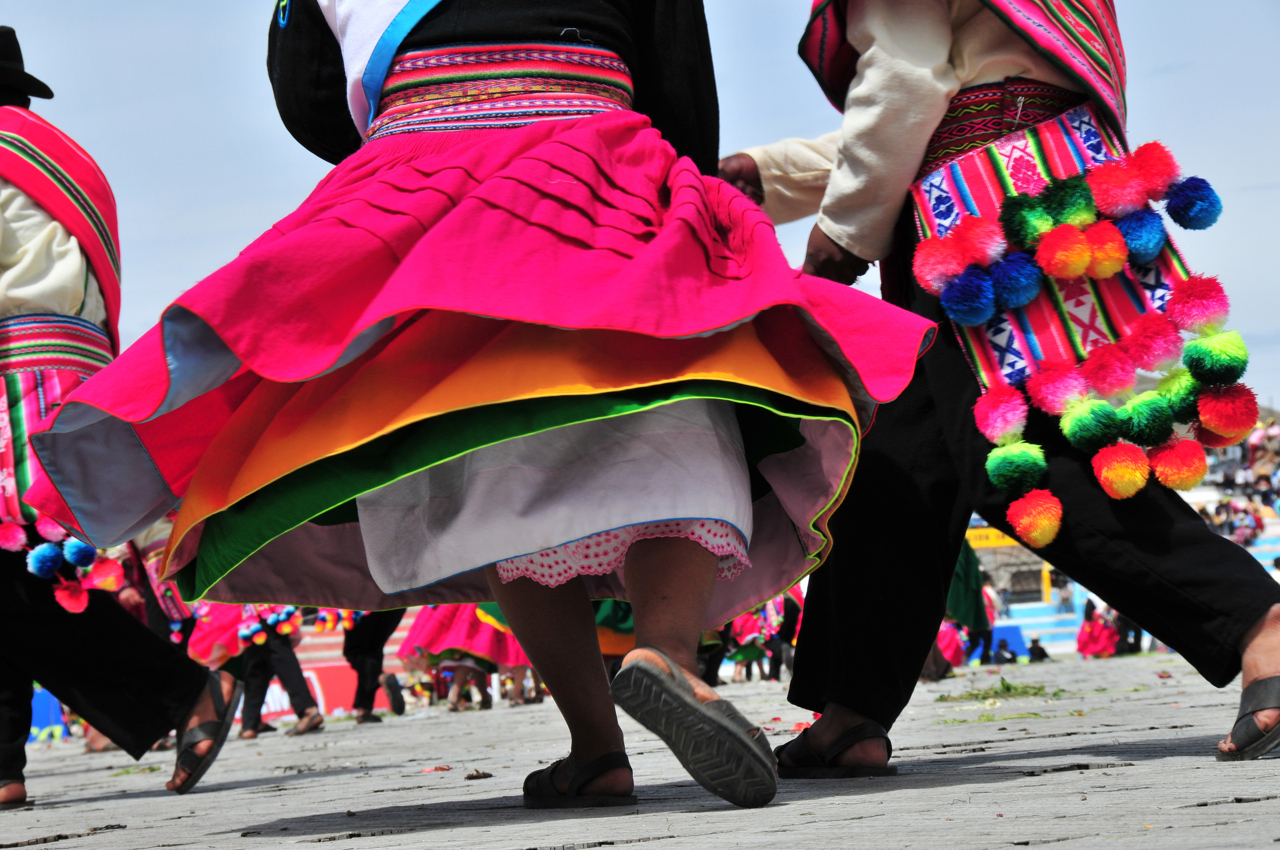
While polleras are used for traditional festivals and folklore, you’re sure to see the dazzling dresses as you explore with a Bolivia or Peru travel guide. In these countries, the word pollera denotes a skirt worn by the urban mestizo and the rural indigenous classes. In the Bolivian altiplano, the urban pollera is made of eight meters of cloth and it is worn with four to five embroidered underskirts, which gives the Cholitas (mestizo women who wear the pollera) a “round” shape.
Many women wear polleras daily, though they save their more elegant garments for special occasions. The most expensive polleras have very full skirts and more detailed embroidery. A very voluminous pollera indicates a wealthy wearer.
Today, wearing a pollera has become a sign of identity and pride throughout the region. Peruvian Congresswoman Claudia Coari Mamani has earned praise for wearing her pollera to Congress meetings in Lima.
In the Andean town of La Oroya, women celebrate International Women’s Day in March with a race called Nuna Warmy, or “women’s soul” in Quechua. The racers wear polleras to symbolize a woman’s strength.
In recent years, contemporary fashion designers have reinterpreted the pollera, like Chiara Machiavelo of Escudo, Micaela Llosa from Philomena and Sumy Kujon, among many others.
To celebrate the rich heritage of these beautiful garments, Aracari has created Peru tours with Art Trail Community. This exclusive experience allows travelers to visit Las Polleras de Agus to learn more about polleras and see how they’re made. With a little help from the artisans and our Peru specialists, you can even try your hand at embroidery. Or, leave it to the masters. Either way, you’ll have a pollera you can wear with pride.
Browse our handcrafted itineraries for inspiration.