

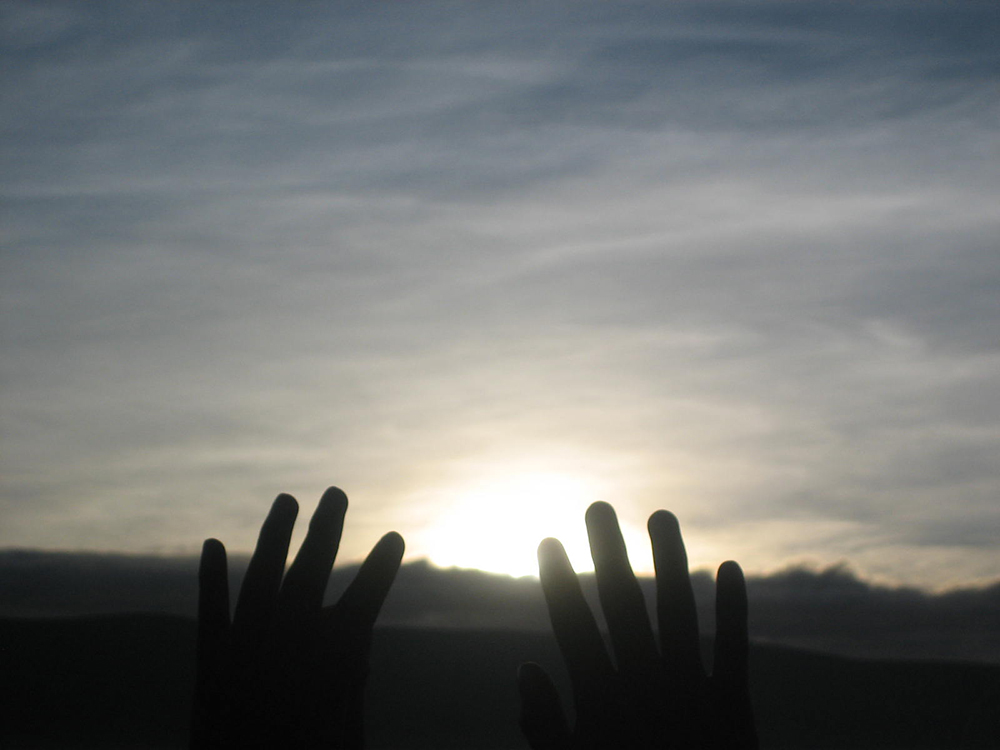
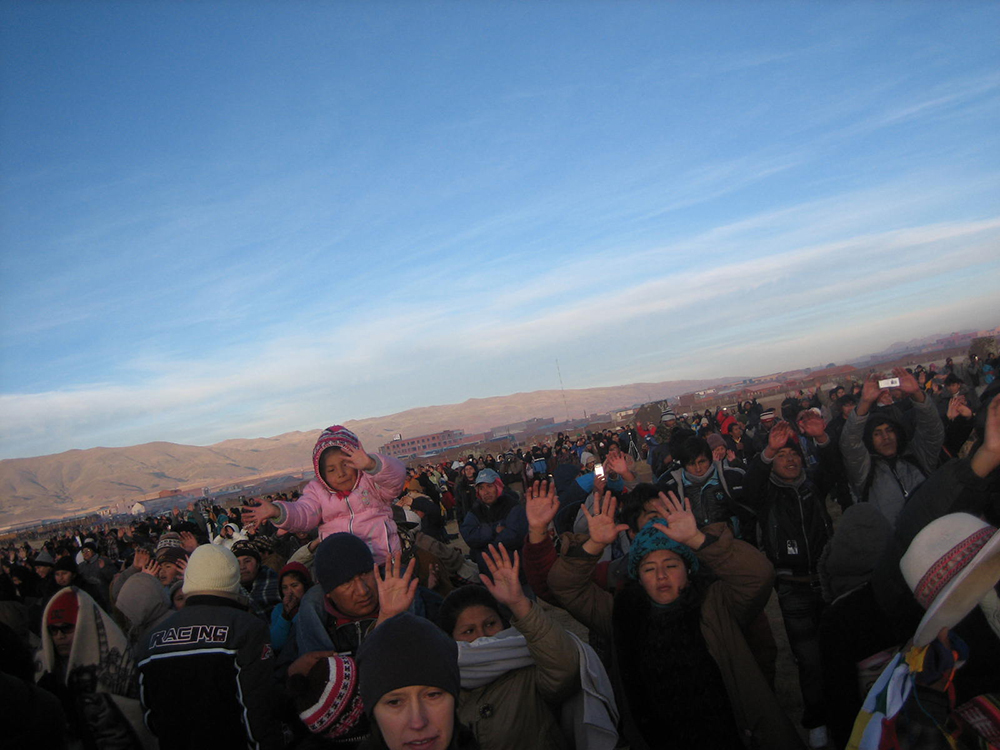
Just as the the first rays of light began to peek over the horizon, everyone raised their hands into the air and faced the rising sun. At 3,850 meters (12,631 ft) above sea level it was frigid outside. I put my gloved hands in the hair. Some people began to chant “jallalla”, an Aymara expression of hope, satisfaction and appreciation for life, often used during ceremonies. It was a powerful moment, even from an outsider’s perspective.
Aymara New Year
This was June 21st 2011, when I had the opportunity to experience the Aymara New Year in Tiwanaku, Bolivia. Coinciding with the winter solstice, when the earth is furthest away from the sun, June 21st is considered the start of the New Year because it marks the start of a new agricultural cycle. Each year colorful ceremonies take place across the Altiplano. Offerings are given in thanks to Pachamama, or Mother Earth, and the sun so that there will be a good harvest in the coming year.
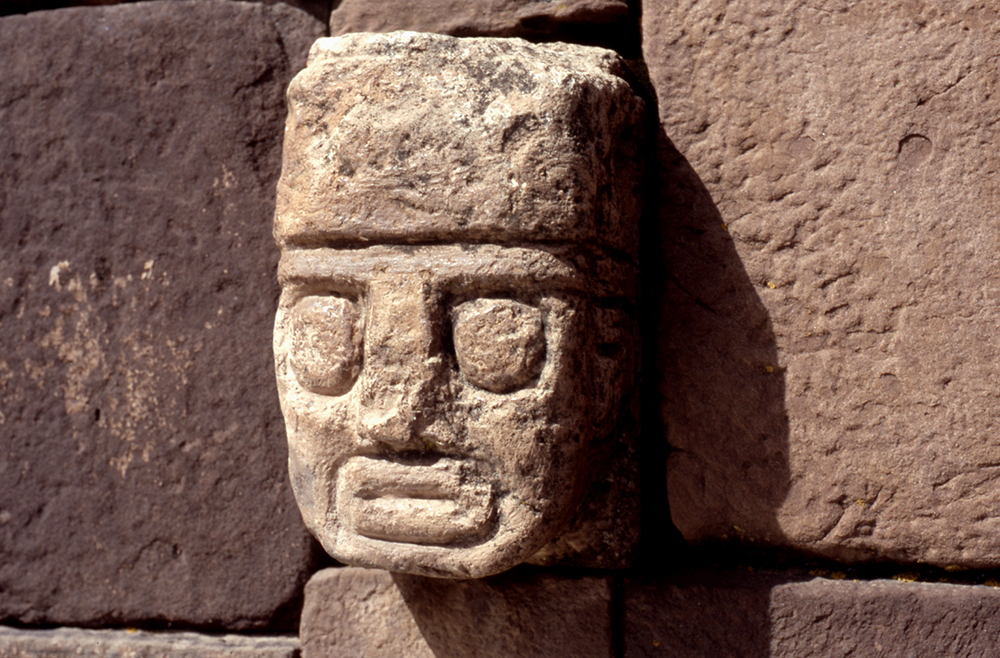
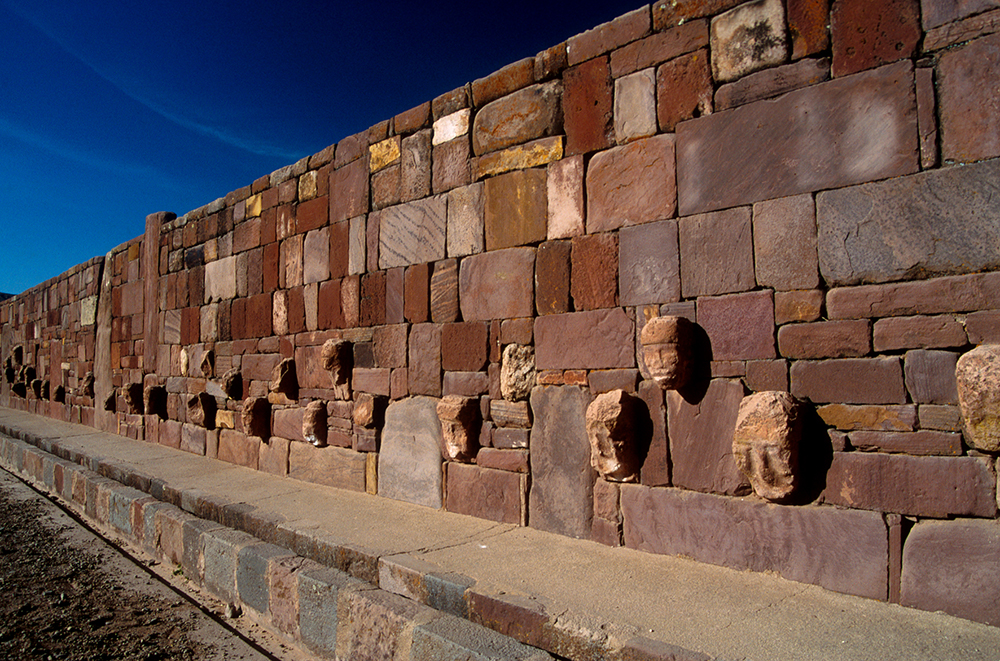
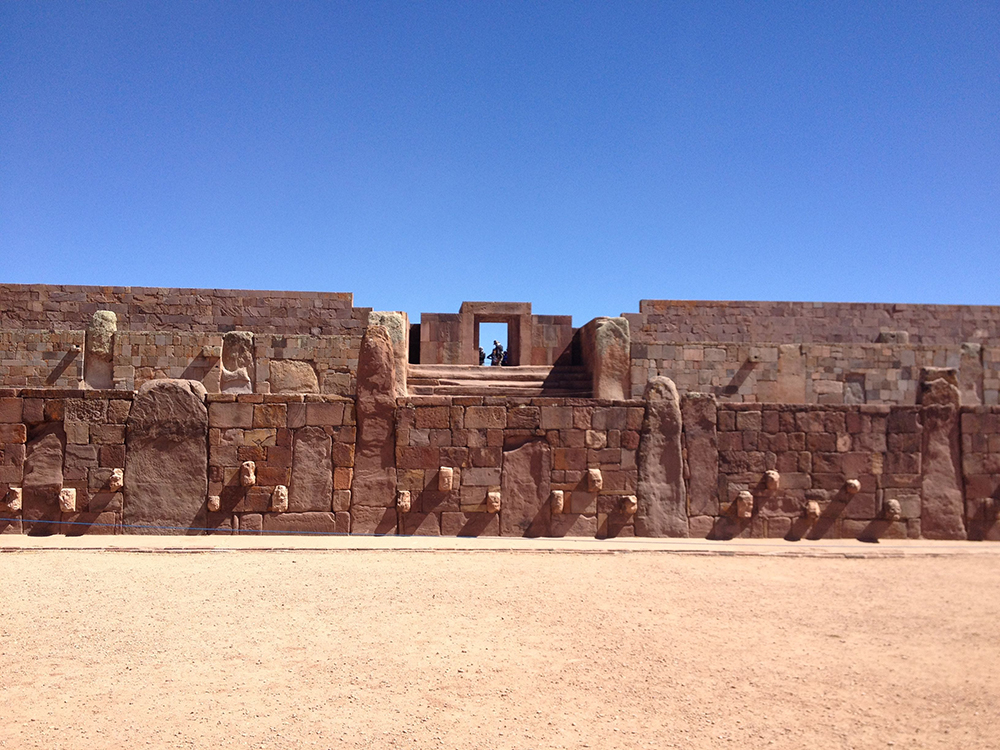
The Aymara are the modern day descendants of the Tiwanaku. Tiwanaku is the name of both the culture and the Pre-Columbian UNESCO World Heritage archaeological site, located north of the city of La Paz and south of Lake Titicaca in Bolivia. It is thought to have been the spiritual and political capital of one of the most important Pre-Inca cultures whose empire reached into modern-day Peru and Chile. The Tiwanaku people were highly skilled in architecture, as can be seen in what remains of their ceremonial and public buildings. In addition they were very knowledgeable about astrology, learning from their observations to know when to plant and harvest crops. The manmade terraces and irrigation technology of the Tiwanaku Empire were important contributions to agricultural and cultural evolution by making it possible to adapt to different climates and farm sustainably. These innovations were later used by succeeding civilizations extending as far away as Cusco.
Research shows that Tiwanaku probably started out as a small village around 1200 BCE, eventually reaching its peak in the 8th century AD. The empire began its demise in the 11th century although reasons for its collapse are unknown. The original city was mostly built from adobe, and much has been covered by the modern town. However, in the protected archaeological zones one can still see immense stone buildings forming part of the ceremonial center. The largest monument is the temple of Akapana, originally a pyramid but now only one of the walls remains intact. It is surrounded by well-preserved drainage canals which demonstrate the architectural skills of the Tiwanaku people. To the north of the Akapana, in the main plaza of the complex, is a rectangular, open temple called Kalasasaya, believed to have been an observatory.Inside there are two carved monoliths and the Gate of the Sun, one of the most important Tiwanaku works of art. During the winter solstice, the rising sun passes through the door of the temple of Kalasasaya and touches the Ponce Monolith. The position of the rising sun on various parts of the site during solstices and equinoxes was thought to have been used as a calendar.
As the ceremony came to a close, people were free to wander the complex in the morning light. We passed the remnants of the temple of Akapana and entered Kalasasaya, where I was most eager to see the Gate of the Sun, a towering arch, originally found on the verge of collapse with a large crack down the middle, but now standing as it once was. Taking a few steps back and looking through the arch, it was interesting to imagine what it must have been like centuries ago when everyone appreciated the power of Pachamama and the cycle of seasons that guided the way of life.
Travel to Bolivia for Aymara New Year
Contact us today for expert travel information on Bolivia and visting during Aymara New Year.