
Peru festival, Inti Raymi
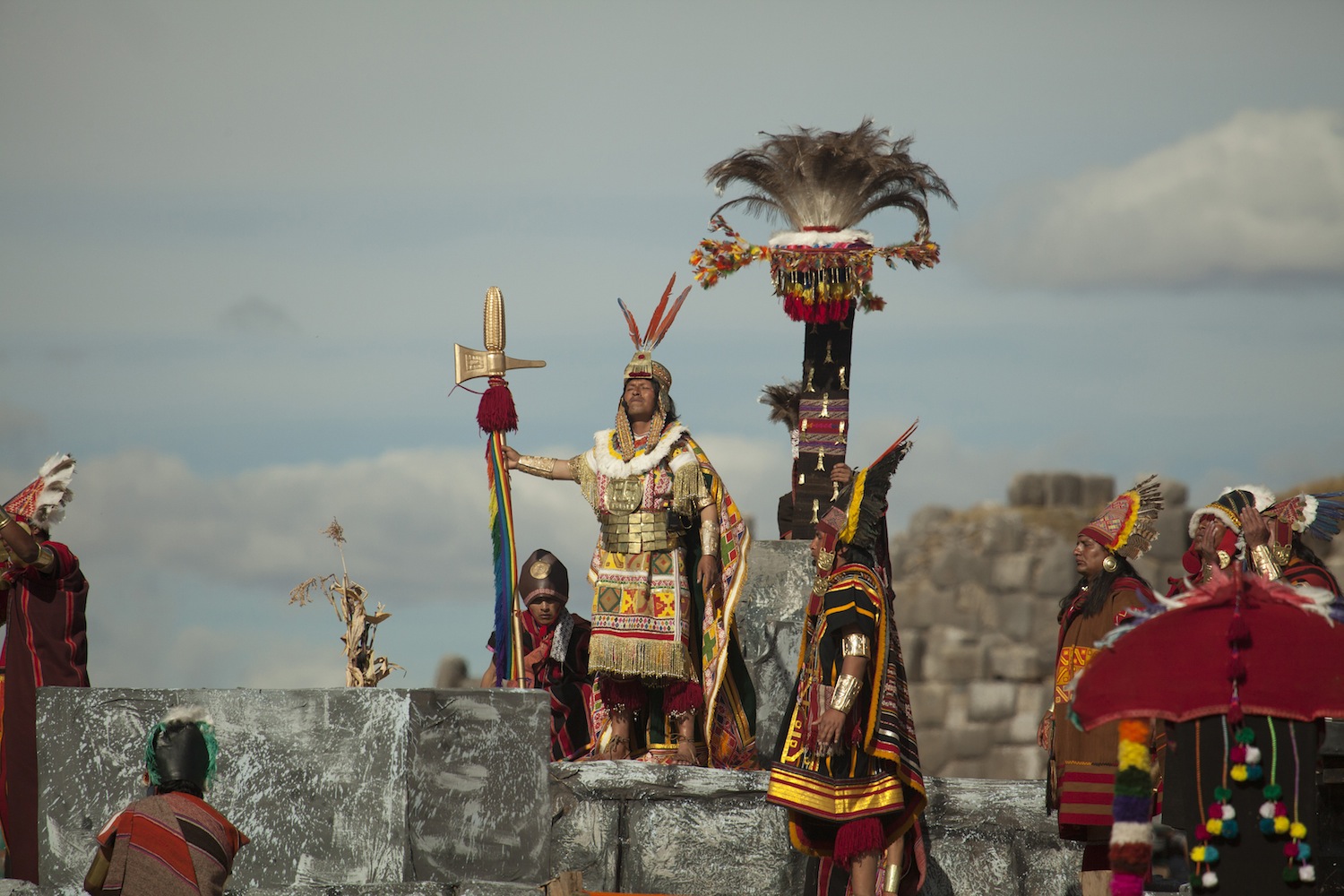
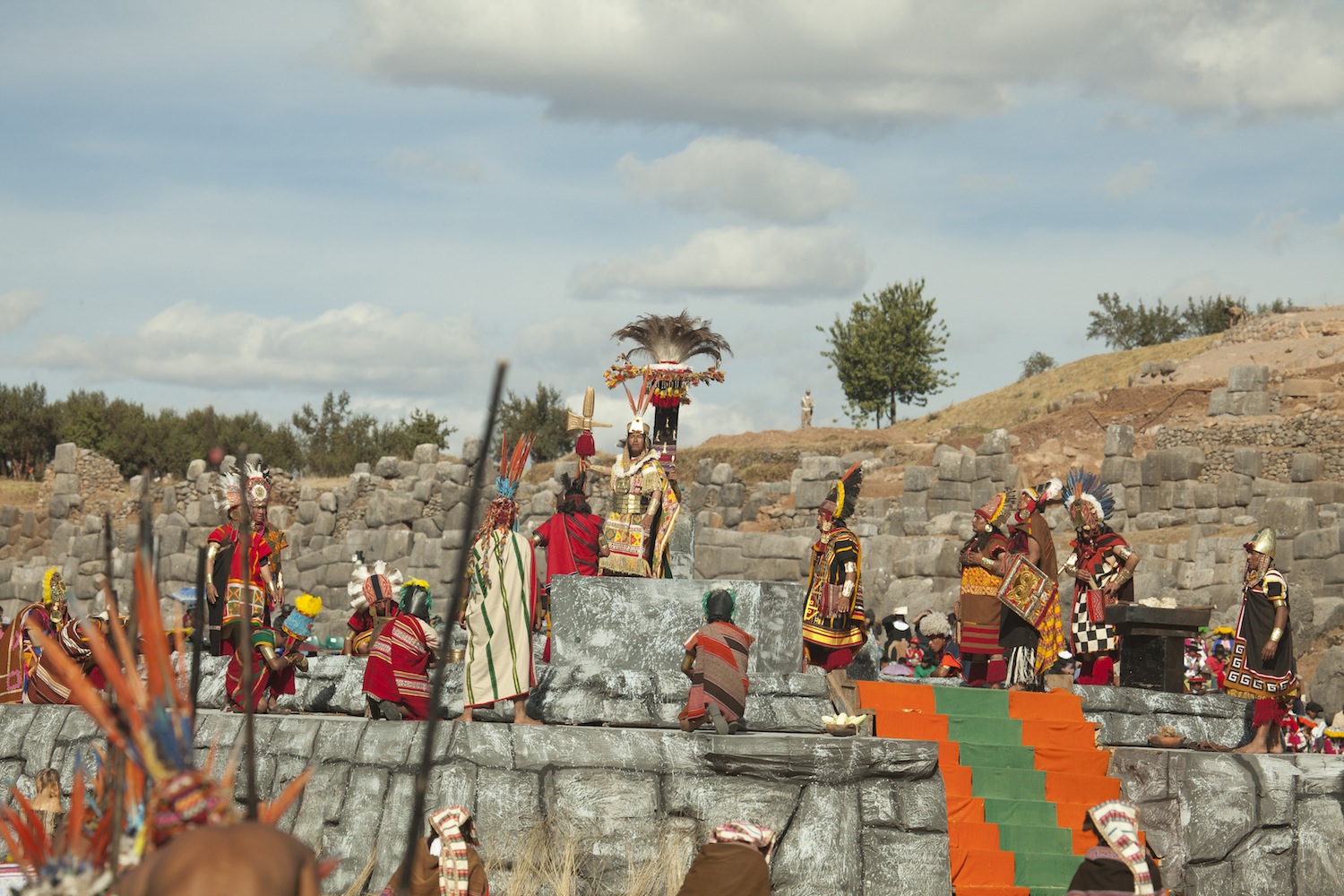
Today marks the colorful celebration of Inti Raymi, or the “festival of the sun,” thought to have been one of the most important rituals in the Inca Empire. On June 24th each year just after the Winter Solstice, a religious ceremony takes place venerating Inti, the most significant God in the pantheon of Andean religion. Huge importance was placed upon the movement of the sun, and the solstice marked the return of the sun from its farthest position from earth. This also meant the beginning of longer days, the start of a new cycle, and the return of the source of life to the Andes. Thus, Inti Raymi was a celebration of the Inca New Year.
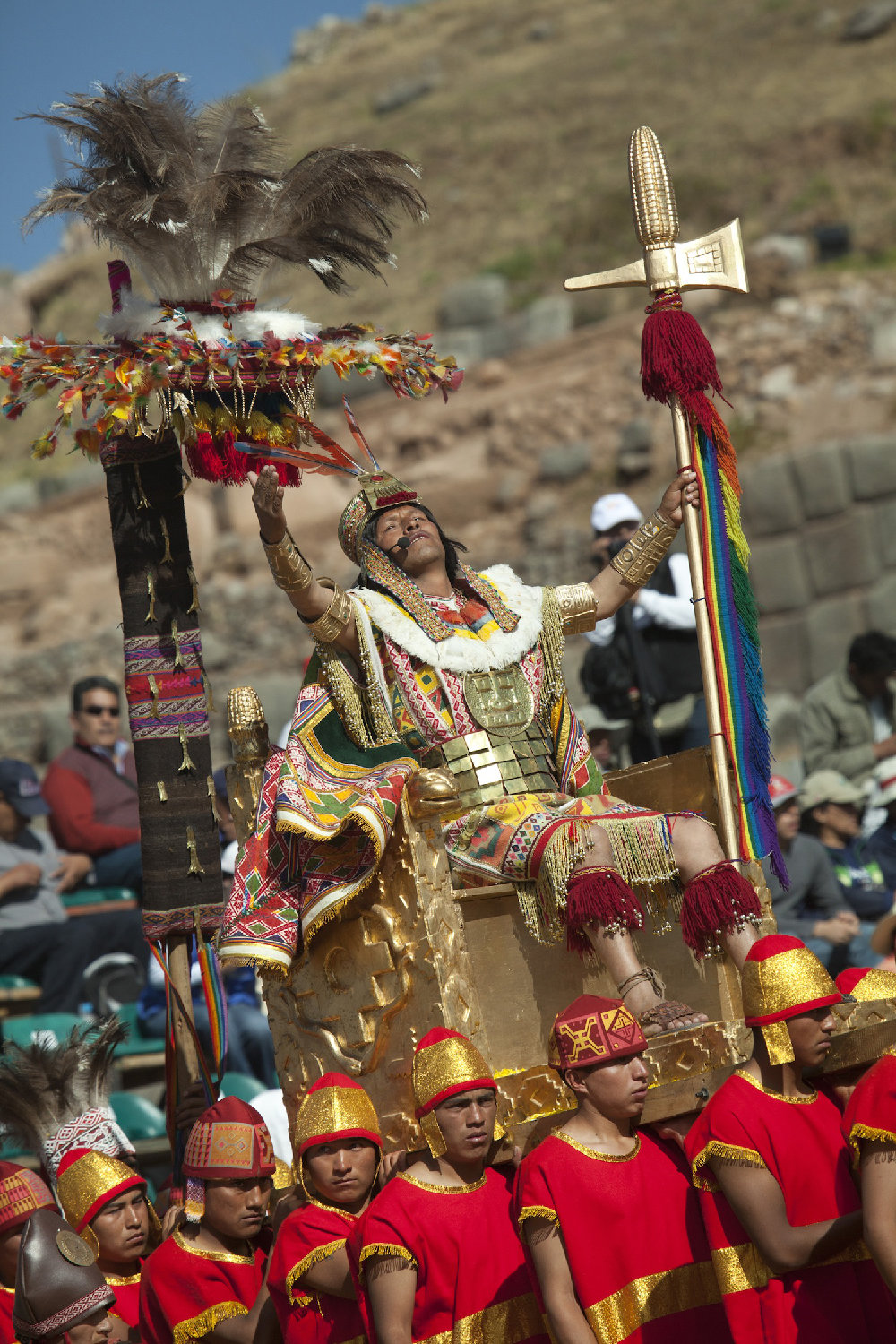
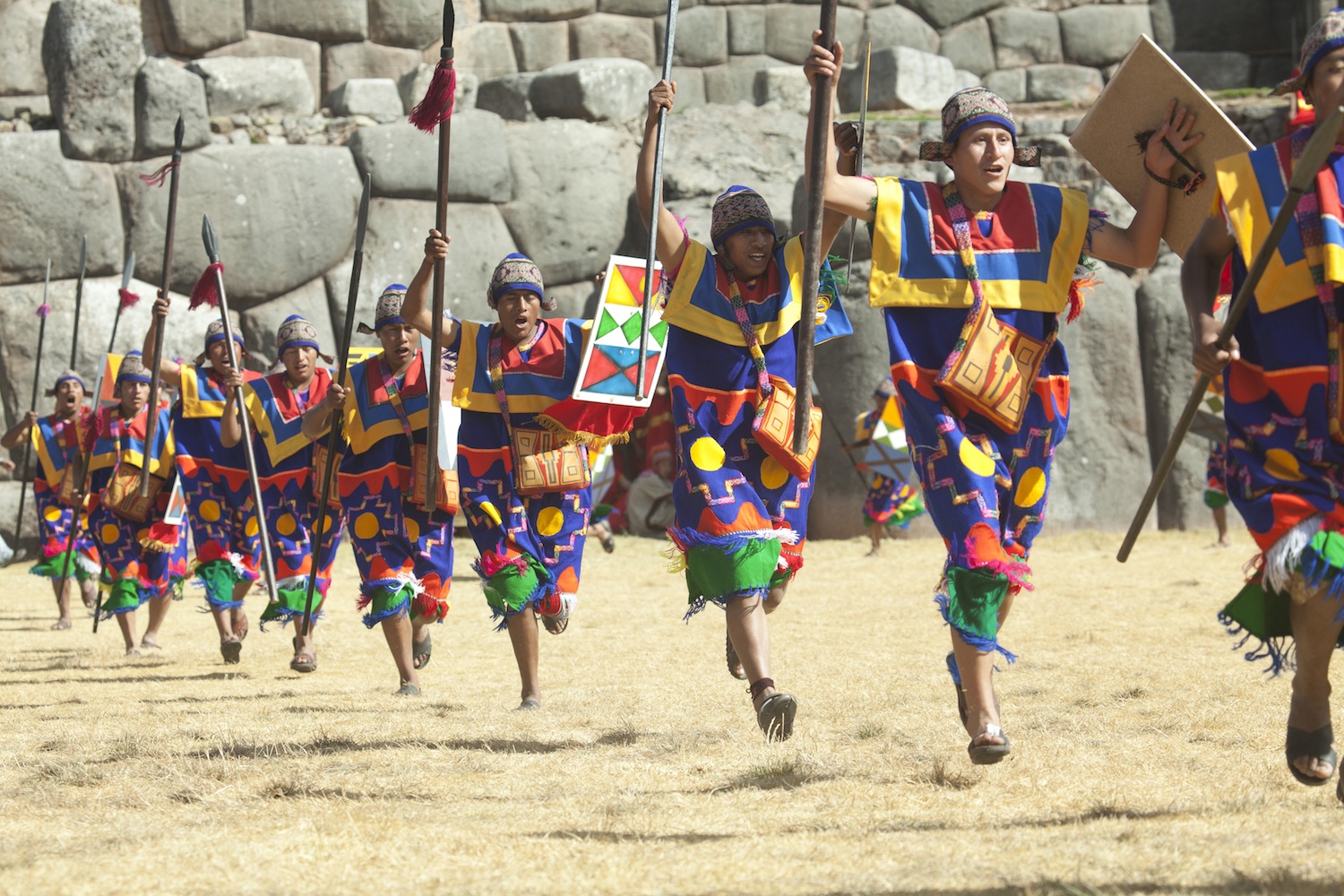
A theatrical reenactment of the celebration takes place each year in Cusco, attracting thousands of locals and tourists alike. In preparation for the festival, hundreds of actors are chosen to take part in the reenactment, including the Sapa Inca, the ruler of the Inca empire. On the morning of the 24th, the crowd assembles at the fabled Koricancha, or Sun Temple, and takes part in a ceremony led by the Sapa Inca and praising Inti. The crowd then marches to the Plaza de Armas carrying the Inca on a golden throne to continue the celebrations before beginning the climb to the temple-fortress of Sacsayhuaman. Following in tow are the hundreds of other participants, including high priests in traditional ceremonial robes, officials of the court, and other nobles, all dressed in colorful garb. Once they arrive at Sacsayhuaman, an elaborate ritual takes place including several speeches and sacrifices. The ceremony ends with a procession back to Cusco’s main square and once again, the Inca new year has began.
Although this festival has become rather commercialized and contrived in recent years and has nothing on the authenticity and splendor of Corpus Christi and other traditional festivals, we still think it is worth being familiar with the Inti Raymi celebrations because of their historical significance and importance to indigenous culture, and we generally invite our guests to pop by to have a glance at the ceremonies. Please contact us to incorporate one of the many spectacular festivals in Peru on a trip here.
